

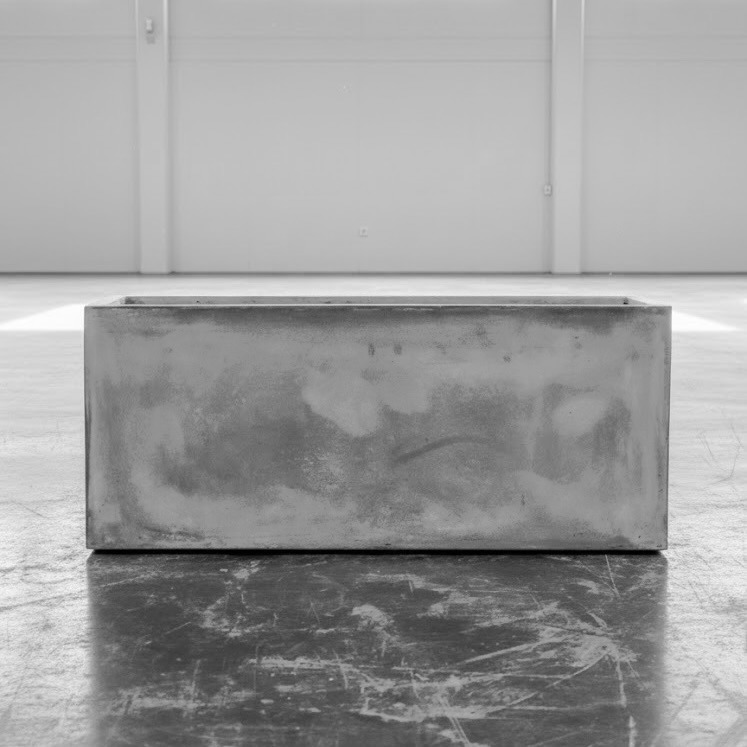
Concrete planters deliver something few other garden products can match: genuine, long-term durability combined with serious architectural impact. Whether you are styling a compact Melbourne courtyard, a coastal Queensland deck, or a sprawling Sydney garden, concrete planters bring structure, permanence, and visual weight that simply makes a space feel considered and complete. They handle Australian sun, salt air, and seasonal downpours without flinching. Moreover, today’s concrete and composite planter designs have evolved far beyond the heavy, grey blocks of older decades. Contemporary collections now include sleek cylinders, tapered troughs, low bowls, and textured cubes that suit both residential gardens and high-end commercial landscapes. This guide covers everything you need to make a confident buying decision: materials, sizing, drainage, styling, maintenance, and what to avoid.
Why Concrete Planters Work So Well in Australia
Australia’s climate is demanding on outdoor products. UV intensity, heat spikes, and coastal humidity all accelerate deterioration in lesser materials. Concrete and its modern composites handle these conditions exceptionally well. Their dense, solid structure resists UV degradation. They stay stable through temperature swings that would warp timber or delaminate lightweight resin pots.
Additionally, the thermal mass of concrete moderates soil temperature. Roots stay cooler during summer heat and warmer during mild winters. This benefit alone improves plant health significantly. Studies from the Royal Botanic Gardens Victoria highlight that consistent root temperature is one of the key factors in container plant vitality.
Beyond performance, concrete planters offer genuine design permanence. Timber rots. Thin-walled plastic fades and cracks. Terracotta chips in frost. Concrete, particularly reinforced or composite concrete, simply endures. Furthermore, the range of finishes available today – from smooth polished surfaces to raw textured faces – means concrete suits both industrial-modern and organic garden aesthetics equally well.
Outdoor Emporium’s Rounds Category showcases exactly how far modern concrete-look design has progressed. Ranges like the QuarterLite Fluted Rounds, ShadowLine Cylinder QuarterLite, and Tall Rounds QuarterLite deliver the visual authority of concrete with a significantly reduced weight profile – making them practical for rooftops, balconies, and upper-floor terraces.
The Rise of Lightweight Composite Concrete Alternatives
Traditional poured concrete is heavy. Repositioning a large solid concrete planter requires two or more people and, sometimes, equipment. Modern composite materials – such as QuarterLite, PolyStone, and Poly Terrazzo blends – replicate the look and feel of concrete while weighing a fraction of the original. They resist cracking under thermal expansion, handle freeze-thaw cycles, and resist UV-induced colour fade. Consequently, they suit balcony gardens and rooftop spaces where structural weight limits apply.
For buyers who want the genuine article, traditional concrete remains a superb and time-tested choice for in-ground or fixed landscape installations. Both options deserve consideration depending on your space, application, and plant selection.
Planter Materials Compared: Concrete vs. Alternatives
Choosing the right planter material affects plant health, maintenance frequency, and long-term value. Below is a clear comparison of the most common outdoor planter materials available to Australian buyers in 2026.
| Concrete and Composite • Exceptional UV resistance • High thermal mass • 20-50+ year lifespan • Wide design range • Heavy (traditional forms) • Requires sealing • Excellent frost tolerance |
| Terracotta • Breathable and porous • Natural aesthetic • Moderate cost • Chips and cracks easily • Poor frost tolerance • Dries quickly – needs frequent watering • 5-15 year lifespan |
| Timber Planter Boxes • Natural warmth • Lightweight options available • Requires sealing and lining • Prone to rot over time • Good insulation • 7-15 year lifespan (treated) • Sustainability concerns |
| Fibreglass and Resin • Very lightweight • Flexible design options • UV fading risk • Can crack under impact • Lower thermal mass • Variable quality • 10-20 year lifespan |
| Glazed Ceramic • Decorative and colourful • Dense and heavy • Fragile in frost • Excellent finish durability • No sealing required • Limited large sizes • 10-25 year lifespan |
| Corten Steel • Industrial modern look • Very durable • Rust patina develops • Heavy gauge options • Excellent lifespan • Can stain surrounds • 20-30+ year lifespan |
Clearly, concrete and its composites offer the most balanced combination of durability, design range, and plant health support. Outdoor Emporium’s Planter Boxes collection includes both composite concrete-look options and the popular Rust 2mtr Planter Box and Rust 2.4m Planter Box for buyers who love the corten aesthetic. Similarly, the Terracotta collection suits buyers seeking a more organic, traditional finish.
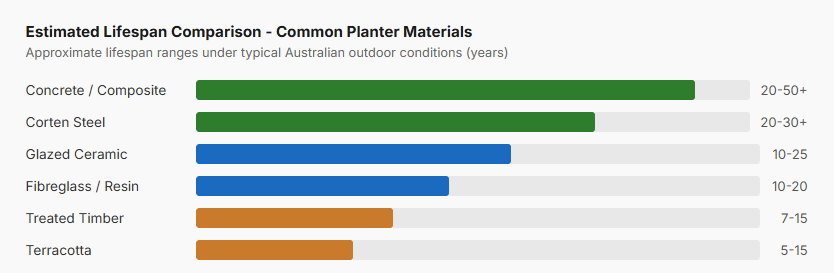
Note: Lifespan estimates are based on published horticultural and landscape industry guidelines. Actual lifespan varies with maintenance, climate exposure, and material quality. Data sourced from Australian Institute of Landscape Architects (AILA) guidance and horticultural literature.
Choosing the Right Size Concrete Planter for Your Space
Size selection is one of the most consequential decisions in outdoor planting. Too small, and your plant becomes root-bound, stressed, and ultimately unhealthy. Too large, and waterlogging risk increases while the visual proportion of the pot overwhelms the plant. Getting size right balances plant health, spatial proportion, and practical usability.
Sizing for Plant Type
Shallow-rooted plants like succulents, herbs, and ground covers suit low bowls and compact cube planters. Outdoor Emporium’s QuarterLite Convex Low Bowls and Low U Bowl PolyStone from the Bowls and Bases collection are well-proportioned for these applications. Deep-rooted shrubs, ornamental trees, and large perennials demand far greater volume. Options like the XL U Pot Poly Terrazzo, XL Convex Tall Round, and XL Tube Planter provide the root depth these plants require to thrive.
| Quick Fact – Root Space and Plant Health Most horticultural guidelines recommend that the planter diameter should be at least 1.5 to 2 times the root ball diameter of the plant at time of planting, with room for 2-3 years of growth. Tight root conditions restrict water uptake and nutrient cycling significantly. Source: Royal Horticultural Society – Container Gardening Guidelines |
Sizing for Spatial Proportion
A single large outdoor planter makes a stronger design statement than three small ones clustered awkwardly. For courtyards and entryways, large concrete planters anchor the space with visual authority. The Giant 150cm QuarterLite Bowl and 90cm Bowl and Base QuarterLite from Outdoor Emporium’s Oversized Pots and Planters range are purpose-built for this kind of statement placement.
Conversely, balcony gardens benefit from carefully considered proportions. Tall, slim planters like the Tube Planter QuarterLite or ShadowLine Cylinder QuarterLite provide substantial growing volume while occupying minimal floor area. This makes them excellent choices for narrow balconies and terrace edges.
Weight Considerations for Upper-Level Spaces
Traditional concrete planters are exceptionally heavy. A 60cm solid concrete bowl can exceed 80kg empty. Always verify the structural load rating of your balcony or deck before installing large heavy planters. Lightweight composite alternatives like QuarterLite collections weigh considerably less – often 70 to 85% lighter than equivalent traditional concrete – while maintaining visual authenticity. For Australian apartment balconies, composite concrete-look options are often the only viable choice from a structural safety standpoint.
| Small to Medium (under 50cm) • Herbs, succulents, annuals • Windowsills, tabletops • Balcony edge accents • Indoor-outdoor transitions |
| Medium to Large (50-90cm) • Shrubs, ornamental grasses • Courtyard feature plants • Entranceway pairs • Poolside accents |
| Oversized (90cm+) • Small trees, large palms • Statement garden centrepieces • Commercial landscapes • Large terrace anchors |
Drainage, Soil, and Root Health in Concrete Planters
Drainage is the single most important technical consideration in container planting. Waterlogged soil suffocates roots, creating anaerobic conditions that promote rot pathogens and kill plants rapidly. Concrete’s density and weight mean planters hold more soil volume. Therefore, drainage design matters even more in concrete and large outdoor pots than in smaller, lighter containers.
Drainage Hole Requirements
Every concrete plant pot needs at least one drainage hole. Larger planters should have two or more, proportionally spaced. A single 2.5cm hole in a 60cm planter is typically inadequate. Aim for drainage holes that are at least 3-4cm in diameter, or cluster multiple smaller holes. Elevating planters slightly off the ground on pot feet or risers improves drainage flow further and prevents the hole from sitting flush against a waterproof surface.
What to Layer at the Base
Placing coarse gravel, chunky perlite, or broken terracotta shards at the base of the planter before adding potting mix improves water movement through the soil profile. Avoid fine sand – it compacts over time and can actually block drainage holes. Additionally, a layer of horticultural fabric or geotextile over the drainage layer prevents fine soil particles from washing down and clogging the gravel over time.
Choosing the Right Potting Mix
Never fill concrete planters with garden soil. Garden soil compacts severely in containers, restricting root growth and drainage. Always use a quality, open-structured potting mix. For Australian conditions, choose a mix with a 5-star Australian Standards rating (Standards Australia AS 3743). These mixes are formulated for container use, with appropriate moisture retention and drainage characteristics. Adding 20-25% by volume of perlite or coarse pine bark further improves aeration for deep-rooted plants in large outdoor pots.
Lining Your Concrete Planter
Lining is not always mandatory but delivers real benefits. A breathable horticultural liner keeps roots slightly insulated from extreme concrete surface temperatures during summer heat events. Liners also reduce moisture evaporation through the pot walls, reducing watering frequency. For concrete planters used with edible plants, a food-safe liner adds a protective barrier between the concrete and root zone – particularly relevant for unsealed planters where lime leaching is a consideration.
Styling Concrete Planters Across Australian Garden Styles
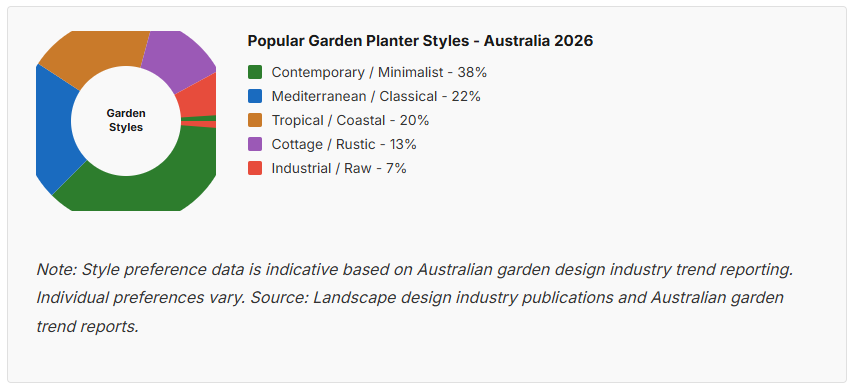
One of the greatest strengths of concrete planters is their design versatility. The same material appears equally at home in a minimalist Bondi courtyard, a lush Queensland tropical garden, a structured Melbourne modernist landscape, or a heritage-influenced Adelaide garden. The key is matching the planter form to the garden’s visual language.
Contemporary and Minimalist Gardens
Clean lines define contemporary Australian outdoor design. Smooth-faced cylindrical planters, square cubes, and tapered rounds reinforce the geometry of paved courtyards and architectural homes. Outdoor Emporium’s Cube Planter QuarterLite, Short U Pot QuarterLite, and Fluted Rounds QuarterLite collections deliver precisely this aesthetic. Paired with structural plants like agaves, Phormium, or Ficus, they create bold, low-maintenance garden statements.
Similarly, the Duopoly Planter and Mixed Cylinder PolyStone work beautifully as grouped arrangements. Mixing heights within the same material family creates visual rhythm without visual chaos.
Mediterranean and Classical Gardens
Traditional garden designs respond well to more ornate planter shapes. Outdoor Emporium’s Anduze Urn collection bridges this beautifully. The Anduze Urn Traditional Classic Stone, Anduze Urn Striped QuarterLite, and Anduze Urn Authentic Flamme Weathered carry a centuries-old French garden heritage. They suit rose gardens, lavender borders, olive trees, and bay trees with ease. Their organic, artisanal aesthetic provides warmth that pure concrete rarely achieves alone.
Tropical and Coastal Gardens
Australian coastal and tropical gardens demand planters that tolerate salt air, humidity, and intense UV. Composite concrete-look planters outperform most alternatives in these conditions. The Egg Pots QuarterLite and Middle Rounds QuarterLite from Outdoor Emporium’s Rounds collection work well with lush tropical plantings – heliconias, bird of paradise, palms, and cycads. Their organic form echoes the natural shapes found in tropical landscape design.
Courtyard and Balcony Design
Balcony gardens require planters that maximise growing volume within tight spatial and weight constraints. The Balcony Planter from Outdoor Emporium’s Planter Boxes collection addresses this directly. Its elongated trough format fits standard balcony rail widths. The Vermont Planterboxes QuarterLite and Soft Edge Planterbox Poly Terrazzo similarly suit balcony-edge planting schemes with their refined, contemporary profiles.
For courtyard designs where the planter becomes architecture itself, the Euro Trough 132 and XL Planter Box provide substantial linear presence. These work beautifully as garden dividers, border definers, and screening planters for tall hedging plants like Murraya, Lilly Pilly, or bamboo screens.
Concrete Planters in Commercial Landscaping and Architecture
Commercial landscapes demand planters that perform under constant public exposure. High foot traffic, cleaning chemicals, variable irrigation, and the need for consistent visual presentation across large sites all favour concrete and composite concrete planters decisively. Architects, landscape architects, and commercial property managers across Australia increasingly specify concrete planters as their first choice for permanent landscape installations.
Outdoor Emporium serves commercial clients directly. The Wholesale Garden Pots range provides commercial volume options for projects requiring consistent units across large areas. Hospitality venues, shopping precincts, residential developments, office campuses, and public realm projects all benefit from the durability and visual sophistication of concrete and composite planter solutions.
Key Commercial Applications
- Retail precincts: Street-level planters defining pedestrian zones and softening hard commercial facades
- Hotel and hospitality: Entrance statement planters, poolside arrangements, rooftop terrace gardens
- Residential developments: Communal courtyard planters, rooftop garden beds, lobby feature plants
- Office campuses: Wayfinding planters, outdoor breakout garden areas, carpark softening
- Public spaces: Streetscape planters, park borders, outdoor dining area accents
For large-scale commercial specification, the QuarterLite Vermont Squares, ShadowLine Cylinder QuarterLite, and Regulation Planter from Outdoor Emporium’s commercial-grade range offer the dimensional consistency, colour uniformity, and durability that specification projects demand.
Maintenance, Sealing, and the Long-Term Life of Concrete Planters
One of the most common buyer questions about concrete planters concerns maintenance requirements. The honest answer is reassuringly simple: quality concrete planters require remarkably little ongoing care. Their longevity advantage over timber, resin, and terracotta is directly tied to this low-maintenance reality.
Why Sealing Matters
Unsealed concrete is porous. Moisture penetrates the surface, and over many years in wet-dry cycling climates, this can cause micro-fractures. Additionally, fresh concrete contains calcium hydroxide, which leaches into soil and temporarily raises pH. Most plants tolerate this naturally. However, acid-loving plants like gardenias, camellias, azaleas, and blueberries may show initial signs of stress in an unsealed new concrete planter.
Sealing solves both issues. Apply a quality concrete sealer – acrylic, polyurethane, or penetrating silicone-based products all work well outdoors. For edible herb gardens, select a product explicitly labelled food-safe. Apply the sealer before first use. Reapply every 5-7 years in exposed outdoor conditions. This simple step extends planter life dramatically and eliminates the pH-leaching concern entirely.
Routine Cleaning
Rinse concrete planters with clean water periodically. Remove algae or moss build-up with a soft brush and diluted white vinegar solution. Avoid high-pressure washing on older or unsealed planters, as it can erode surface detail and accelerate surface degradation. Modern composite concrete alternatives like QuarterLite and PolyStone require even less maintenance – a simple rinse keeps them looking pristine.
Seasonal Preparation
In cooler Australian climates – parts of Victoria, Tasmania, and elevated regions of NSW and ACT – concrete planters may be exposed to occasional frost. Dense, reinforced concrete handles occasional frost well. However, if a planter is already saturated with water when a hard freeze hits, expansion of ice crystals can cause surface spalling. Elevating planters on feet, ensuring drainage is clear before winter, and covering with breathable frost cloth during severe events prevents this issue.
For most of coastal and subtropical Australia, seasonal temperature extremes are far less of a concern. Concrete’s thermal mass actually helps protect root zones from the sharp heat spikes that occur during Australian summer heat waves.
Long-Term Lifespan
Well-maintained, sealed concrete planters routinely last 25 to 50 years. Historical examples from European estate gardens show stone and concrete vessels surviving centuries when protected from physical impact and maintained appropriately. Modern reinforced composite planters from reputable manufacturers are engineered to achieve similar longevity, often with explicit manufacturer warranties. When investing in large outdoor pots and statement garden planters, concrete’s lifespan advantage makes it genuinely cost-effective over time compared to resin or timber alternatives that require replacement every 10-15 years.
| Price Range Note Concrete and composite concrete planter prices in Australia vary significantly by size, material blend, and finish. Indicative ranges as of mid-2026 span from approximately AUD $80 for small composite pots to AUD $2,000+ for oversized architectural planters. Prices change regularly. Always confirm current pricing directly with suppliers. Disclaimer: Price ranges are indicative only and based on general market observation as of June 2026. Actual prices vary. Verify current pricing at outdooremporium.com.au. |
Frequently Asked Questions About Concrete Planters
Below are the most common questions Australian buyers ask about concrete planters, concrete plant pots, and related garden planter topics.
Conclusion: Why Concrete Planters Remain Australia’s Smart Outdoor Choice
Concrete planters have stood the test of time across climates, design eras, and garden styles for very good reason. Their structural permanence, thermal benefits, design versatility, and genuine longevity give Australian gardeners and landscape professionals a planting solution that simply outperforms the alternatives across almost every meaningful metric.
Equally important is the remarkable evolution of the category. Modern composite concrete planters from collections like QuarterLite, PolyStone, and Poly Terrazzo bring the visual authority of concrete to spaces where traditional weight is impractical. Balconies, rooftops, and upper-level terraces across Australia’s major cities now benefit from architectural-quality outdoor garden pots that would have required structural reinforcement a decade ago.
Whether you are completing a minimalist Sydney courtyard with a pair of ShadowLine Cylinders, anchoring a Melbourne terrace with a Giant 150cm QuarterLite Bowl, or lining a Brisbane pool deck with Tall Rounds QuarterLite, the right concrete planter transforms ordinary outdoor space into something genuinely considered. Furthermore, with proper drainage, appropriate potting mix, and periodic sealing, your investment delivers 25 to 50 years of beauty and plant health with remarkably little effort.
Outdoor Emporium’s full range of concrete planters, large outdoor pots, planter boxes, and contemporary garden planters is available online and at their Melbourne showroom. The team at Outdoor Emporium helps both residential buyers and commercial clients find the right planter for any space and budget.