

The Best Garden Pots for Australian Homes & Gardens (2026 Guide)
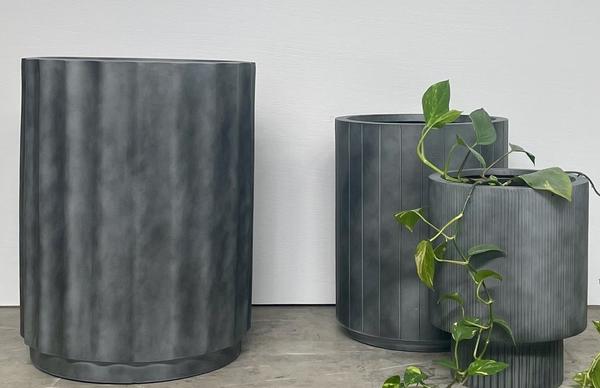
The right garden pot does more than hold soil — it shapes how your entire outdoor space feels. But Australia’s climate is unforgiving: 40°C summers, coastal salt air, sudden frosts in alpine regions, and UV that bleaches cheap materials within a single season. This guide tells you exactly what works, what doesn’t, and how to choose garden pots that will still look great five years from now.
What’s the Best Material for Garden Pots in Australia?
Material is the single most important decision you’ll make — and the most misunderstood. Each option behaves differently in Australian conditions, and getting this wrong costs money twice: once when you buy the wrong pot, and again when you replace it.
Composite Concrete & GRC (Glass Reinforced Concrete)
Composite concrete and GRC pots are the strongest performers in Australian outdoor conditions. Their thermal mass buffers root zones from extreme heat — a meaningful advantage when summer soil temperatures in exposed pots can spike high enough to damage roots. They don’t warp, fade significantly, or lose structural integrity over time. The natural weight makes them wind-stable in exposed courtyards, driveways, and elevated terraces.
The one honest limitation: full concrete is heavy. That makes it unsuitable for balconies or any situation where you need to move pots regularly.
Best for: Permanent courtyard features, commercial landscapes, driveways, large statement plants, wind-exposed gardens.
A clean, contemporary bowl shape in a matte cement finish. Pairs beautifully with architectural plants like Bird of Paradise or a clipped Lilly Pilly ball. Available in Cement Grey and Charcoal.
View Product →Fibrestone — Premium Look, Fraction of the Weight
Fibrestone is a composite material that delivers the textured, stone-like aesthetic of concrete at dramatically reduced weight. It’s become one of the most popular materials in the Australian premium garden market because it works equally well indoors and outdoors, suits contemporary and classic styles, and doesn’t overload balconies or rooftop garden structures. UV-stable formulations hold their colour through intense Australian sun without fading or chalking.
Best for: Balconies, rooftop gardens, indoor-outdoor spaces, rental properties, anywhere portability matters.
An oversized statement piece that makes an immediate visual impact without the weight of full concrete. The scallop form adds organic texture to modern gardens and courtyards.
View Product →Kiln-Fired Terracotta — The Classic That Still Earns Its Place
There’s a reason terracotta has been used in gardens for centuries. The porous walls allow roots to breathe and moisture to regulate naturally, giving most plants a healthier growing environment than dense, sealed materials. The earthy tones age beautifully — every scuff and weathermark adds character rather than detracting from it.
The watch-out: in frost-prone alpine regions, the freeze-thaw cycle can crack unglazed terracotta. In coastal gardens with constant dry wind, the porous walls accelerate moisture loss and require more frequent watering. Kiln-fired terracotta is noticeably denser and more durable than machine-pressed versions — worth the price difference for outdoor use.
Best for: Herbs, Mediterranean plants, Australian natives, traditional-style gardens, anything that needs breathable root conditions.
Hand-thrown kiln-fired pots in traditional and contemporary profiles. Develops a rich patina with Australian weather — better at ten years than day one.
Browse Kiln-Fired →Anduze Urns — European Heritage for Australian Gardens
Originally hand-thrown in the town of Anduze in southern France, these distinctive banded urns with rich glazed finishes have developed a genuine following among Australian landscape designers and serious gardeners. They’re at home framing a Melbourne terrace entry, anchoring a Sydney harbourside courtyard, or standing as focal points along a Queensland pool deck. Authentic versions are kiln-fired and develop beautiful character over time — each one is genuinely individual.
Best for: Statement entries, formal garden axes, heritage and classic-style homes, premium courtyard design.
The definitive Anduze form in a deep, timeless black glaze. Available in two sizes. Works equally well planted with a clipped topiary or standing empty as a garden sculpture.
View Product →Ceramic — High-Impact, High-Care
Glazed ceramic pots offer a colour and finish range that no other material matches — from matte charcoal to rich bottle green, warm amber, and cream. They hold moisture well, which suits tropical and moisture-loving plants. The trade-off is fragility and weight; a hard knock can chip the glaze, and oversized ceramic pieces become very heavy. Avoid leaving unglazed ceramic in alpine frost zones.
Best for: Feature positions in sheltered areas, indoor-outdoor entertaining spaces, tropical plants, decorative focal points.
If you’re coastal, go concrete or well-glazed ceramic. Salt air is merciless to porous materials and cheap plastics. The extra upfront cost of a quality pot pays for itself within the first summer.
How to Choose the Right Size Garden Pot
Pot size is the most common thing gardeners get wrong — and the consequences show up fast. Cramped roots cause stress: yellow leaves, poor growth, and wilting despite adequate watering. Oversized pots risk waterlogging before roots can fill the soil volume. Here’s a practical sizing guide for Australian plants and spaces:
| Pot Diameter | Best Plant Types | Ideal Space |
|---|---|---|
| 10–25 cm | Herbs, succulents, seedlings | Windowsills, kitchen benches, small balconies |
| 25–40 cm | Indoor plants, small shrubs, perennials | Patios, balconies, indoor corners |
| 40–60 cm | Citrus, natives, ornamental grasses | Courtyards, garden entries, smaller patios |
| 60–90 cm | Palms, Ficus, Bird of Paradise, Lilly Pilly | Feature positions, driveways, large patios |
| 90 cm+ | Feature trees, large palms, screening hedges | Statement gardens, commercial, luxury residential |
Choose a pot roughly 5–10 cm wider and deeper than the plant’s current root ball. Going slightly bigger is always safer than going too small — roots need room to establish, and repotting a large plant is a significant job.
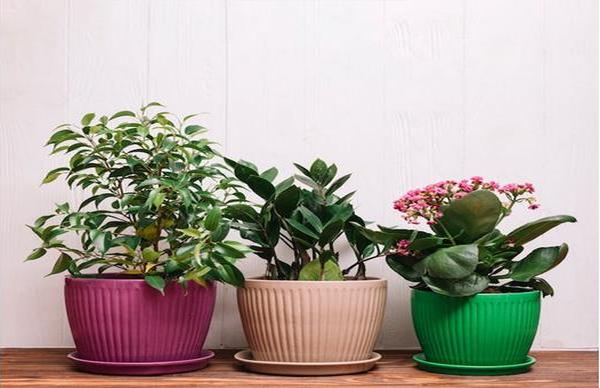
Choosing Garden Pots by Outdoor Space
Balconies & Rooftop Gardens
Weight is everything on any elevated structure. Full concrete is off the table for most balconies — always check your building’s load rating, and when in doubt, use high-quality fibrestone or lightweight composite pots. Keep forms slim and vertical where floor space is tight. A pair of tall, slender planters flanking a sliding door looks deliberate and doesn’t swallow your outdoor area. For extra greenery, macramé wall planters and hanging pots let you add plants without adding structural load.
Courtyards & Entertaining Zones
This is where you can — and should — go big. A well-placed oversized concrete or fibrestone feature pot anchors an outdoor room the way a piece of sculpture does. Treat pots like furniture rather than plant storage: not all the same height, not all the same shape. Two matching large round pots flanking a seating area create symmetry and intention. A scallop bowl on a low riser near a water feature adds organic curves against hard paving.
Front Entries & Driveways
This is your curb appeal moment. A matched pair of Anduze urns or classic kiln-fired terracotta pots flanking an entry immediately lifts the perceived quality of a home. Choose pots tall enough to read from street level — 60 cm and above. Plant with something that gives structure and height: topiary bay trees, columnar conifers, clipped Lilly Pilly balls, or dwarf olive trees.
Large Backyards
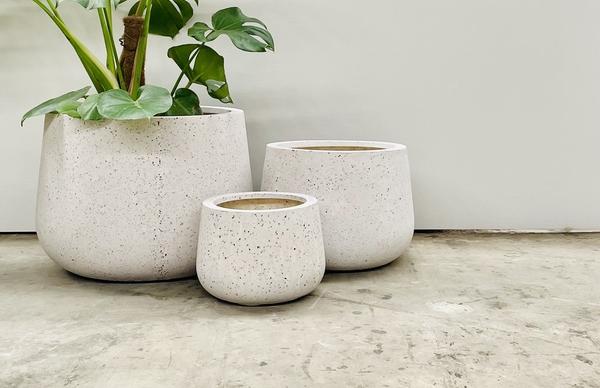
In a big backyard, clusters work better than isolated single pots. Group odd numbers — three or five — with varied heights. Let the largest pot be the hero, flanked by medium ones, with a decorative bowl at ground level completing the base. Mix materials within a consistent colour palette: warm terracotta paired with matte charcoal reads as intentional; earthy grey concrete alongside aged copper looks genuinely luxurious without trying too hard.
Drainage: The Most Overlooked Factor in Pot Success
Drainage failures are the most common silent killer of potted plants in Australia — especially in summer, when sudden heavy rain follows weeks of dry heat. Here’s what to get right:
- Always use drainage holes. A pot without drainage is a slow death sentence for almost every plant except aquatics. If you fall in love with a beautiful pot that has no holes, use it as a decorative sleeve around a nursery pot with its own drainage.
- Raise pots off hard surfaces. Pot feet or risers let water drain freely and prevent roots sitting in pooled water. They also protect pavers from moisture staining.
- Use quality potting mix. Premium-grade potting mixes with perlite and coarse organic material drain faster and aerate roots better than cheap, dense mixes. Australian Standard-rated Premium Grade mixes are the minimum for container gardening.
- Top-dress in summer. A 3–5 cm layer of fine gravel or mulch over the potting mix dramatically reduces moisture loss through evaporation in Australian summer heat.
- Watch for salt build-up. White crust forming on pot surfaces or soil indicates salt accumulation — common in coastal areas and with heavy fertiliser use. Flush pots thoroughly every few weeks during peak growing season.
How to Style Pots Like a Garden Designer
The gap between a garden that looks “nice” and one that looks genuinely designed usually comes down to how pots are arranged — not which plants are in them. A few principles that designers use consistently:
Vary Your Heights
Pots all sitting at the same level read as flat and accidental. Use pot stands, pedestals, natural risers, or tall vertical pot shapes to create layers. The eye naturally follows the highest point — give it somewhere interesting to go.
Choose One Dominant Material
Pick one primary material — say, concrete — and let everything else support it. One terracotta pot among concrete reads as deliberate; five completely different materials compete for attention and look unplanned.
Colour-Coordinate With Your Home Exterior
Charcoal and black pots pair brilliantly with modern Australian architecture — Colorbond roofs, dark cladding, clean rendered surfaces. Warm terracotta and natural stone tones suit Federation, Californian bungalow, and traditional homes. White and cream pots make an easy, clean coastal statement.
Use Odd Numbers
Three pots. Five pots. Never two side by side unless they’re deliberately symmetrical (framing a door, flanking steps). Odd numbers create visual movement and suggest a sense of natural abundance rather than rote placement.
Let Your Feature Plant Breathe
One bold, beautiful plant per large pot looks considered. Cramming multiple species together looks messy and makes it harder to care for each plant properly. Let your feature planting be a statement, not a crowd.
What’s Trending in 2026
The Australian garden pot market has shifted meaningfully in the past two years. A few things worth knowing if you’re shopping now:
Matte Finishes Dominate
High-gloss ceramics have largely given way to matte charcoal, stone grey, and textured concrete finishes as the dominant look in renovated outdoor spaces and new builds. Matte finishes photograph better, age more gracefully, and suit a wider range of architectural styles.
Oversized Is Mainstream
What was a luxury design choice five years ago — a 1-metre feature pot — has become a standard line item in residential landscaping budgets. Australians have figured out that one correctly-scaled bold pot does more work than six small ones.
Sustainability Is Front of Mind
Recycled composite materials and natural finishes are gaining ground over synthetic-look plastics. The most asked question has shifted from “what’s cheapest?” to “how long will this last?” Buying once and buying well is the dominant mindset in the premium market.
Indoor-Outdoor Crossover
Modern fibrestone pots move between lounge rooms and courtyards without looking out of place in either. For renters, apartment dwellers, and anyone who wants flexibility, this crossover capability has become a real purchase driver.
Frequently Asked Questions
Quick Reference: Garden Pot Materials Compared
| Material | Durability | Weight | Best Climate | Best Use |
|---|---|---|---|---|
| Concrete / GRC | Excellent | Heavy | All Australian climates | Courtyards, commercial, feature positions |
| Fibrestone | Very Good | Light | All climates | Balconies, indoor-outdoor, portability |
| Kiln-Fired Terracotta | Good–Very Good | Moderate | Inland, temperate, avoid severe frost | Herbs, natives, traditional gardens |
| Anduze Urns | Excellent (authentic) | Heavy–Moderate | Most climates | Entries, formal gardens, statement design |
| Glazed Ceramic | Good | Heavy | Temperate, sheltered | Feature positions, tropical plants |
| Plastic / Resin | Fair (UV dependent) | Very Light | All (fades in intense UV) | Kitchen gardens, temporary planting |
Find Your Perfect Pot at Outdoor Emporium
We stock premium garden pots across every style and material — from authentic Anduze urns and kiln-fired terracotta to contemporary fibrestone and oversized concrete statement pieces. Australian-owned, Melbourne-based, delivering nationwide.
Browse the Full Range →