
You walk through a garden centre. Everything looks good. You pick a pot that suits the space, bring it home, and within one season, the plant looks worse than it did in the nursery.
Sound familiar?
Outdoor plant pots in Australia face conditions that most pot manufacturers do not design for. Extreme UV. Temperature swings from 5 to 45 degrees. Hard summer rain followed by months of drought. A pot that performs well in Europe or the UK can crack, fade, or overheat a plant’s roots in a single Australian summer.
At Outdoor Emporium, we focus on plant pots that are best for outdoors. So we have brought to you this guide to find out the pots that actually work outside and not just ones that look right in a photo.
Without further ado, let’s get started-
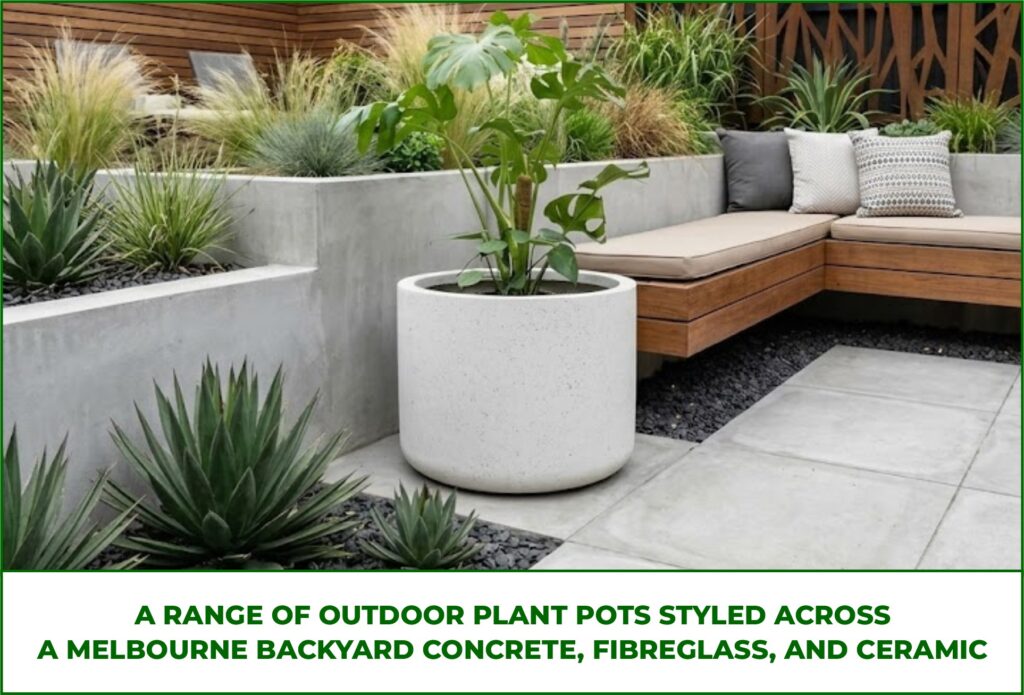
What Makes a Pot Truly ‘Outdoor’ in Australia?
Not all pots sold as ‘outdoor’ are equal. Here is what separates a pot that lasts from one that does not.
- UV resistance — prolonged sun exposure fades, cracks, and degrades many plastics and resins within 2–3 years. Look for UV-stabilised materials.
- Frost tolerance — in Melbourne, Canberra, and alpine regions, overnight temperatures regularly drop below zero. Porous materials like terracotta can crack when trapped moisture freezes inside the walls.
- Thermal mass — pots that absorb and hold heat can cook roots in summer. Lighter coloured pots and materials with low thermal mass (fibreglass, light-coloured concrete) protect roots better in hot climates.
- Drainage — outdoor pots are exposed to heavy rain. Without proper drainage, they fill up and waterlog the root zone fast.
Those four factors alone rule out most cheap outdoor pots. But material is only the start — in the next section, you will see what each option actually gives you.
The Best Outdoor Pot Materials for Australian Conditions
· Fibreglass — The Workhorse
Fibreglass is the most practical material for most Australian outdoor spaces. Lightweight, durable, UV-resistant, and available in finishes that replicate concrete, stone, or ceramic — at a fraction of the weight.
For large outdoor pots in particular, fibreglass is often the only practical choice. A concrete pot at 60 cm diameter can weigh 40–60 kg empty. The fibreglass equivalent weighs under 5 kg. That matters on balconies, rooftops, and any space where portability is part of the plan.
· Concrete — The Statement Maker
Concrete outdoor pots are heavy, permanent, and built for exactly that — permanence. They handle Australian heat well because the mass of the concrete insulates the root zone from rapid temperature changes. Wind does not move them. They age well, developing a natural patina over time.
Best for entrances, driveways, and any spot where a pot is meant to stay for years.
· Terracotta and Ceramic — The Classics
Beautiful. But conditional.
Unglazed terracotta is porous — water and air move through the walls, which is excellent for drainage-sensitive plants. In frost-prone areas, though, trapped moisture can freeze and crack the pot. Glazed ceramic is denser and more frost-tolerant, but heavier and less forgiving if dropped.
Both work well in Sydney and northern Australia. In Melbourne and the south, stick to glazed ceramic or choose frost-rated terracotta specifically.
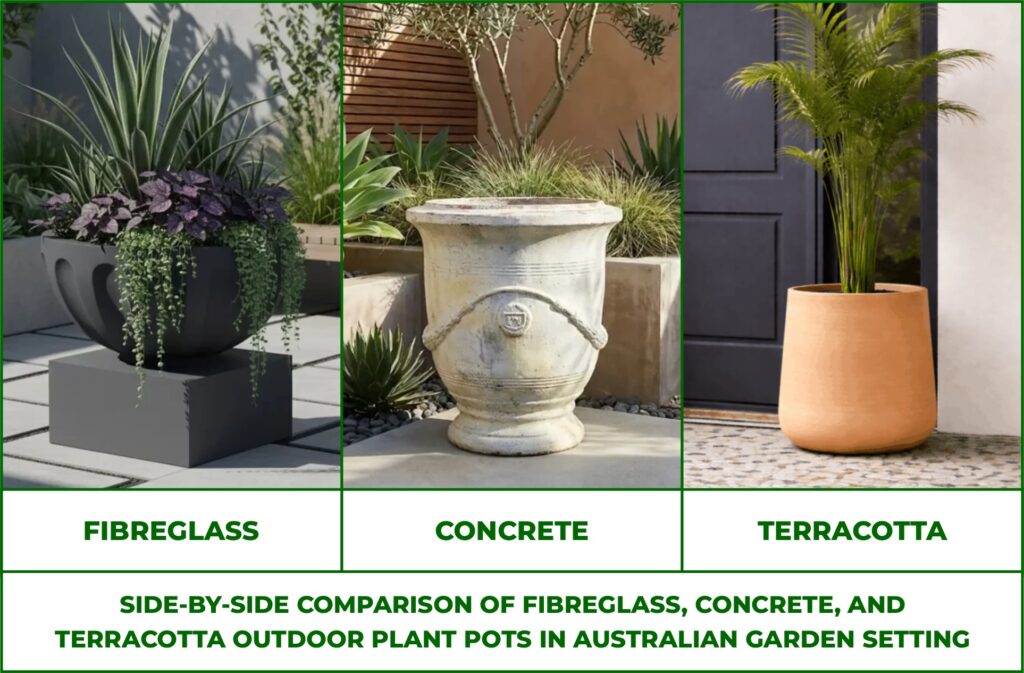
Material chosen. Now the question most people ask last, but should ask first. Let’s see what’s that is.
How Big Should Outdoor Pots Actually Be?
Bigger than you think. Almost always.
The instinct is to match the pot to the plant. But outdoor plants in containers are working harder than plants in the ground. The soil dries out faster. The root space is limited. The temperature inside a small pot can spike 10–15 degrees higher than the surrounding air in direct sun.
Larger outdoor pots buffer all of this. More soil volume means slower moisture loss, more nutrients, and better temperature regulation.
| Plant | Minimum Outdoor Pot Size | Why |
| Herbs and annuals | 20–25 cm diameter | Faster drying in outdoor conditions vs indoors |
| Perennials and shrubs | 35–45 cm diameter | Room to establish — most need 2+ seasons |
| Feature shrubs and small trees | 50–65 cm diameter | Large outdoor pots — root space and stability |
| Trees and palms | 65 cm+ diameter | Extra large plant pots — thermal mass matters |
| Vegetables (root type) | 40 cm deep minimum | Depth more important than diameter for roots |
In outdoor conditions, size is not just an aesthetic decision. It is a survival decision for the plant.
Size sorted. But there is one placement decision that changes everything about which outdoor pots will work — and most people get it backwards.
Where to Use Large Plant Pots Outdoors — and Where Not To
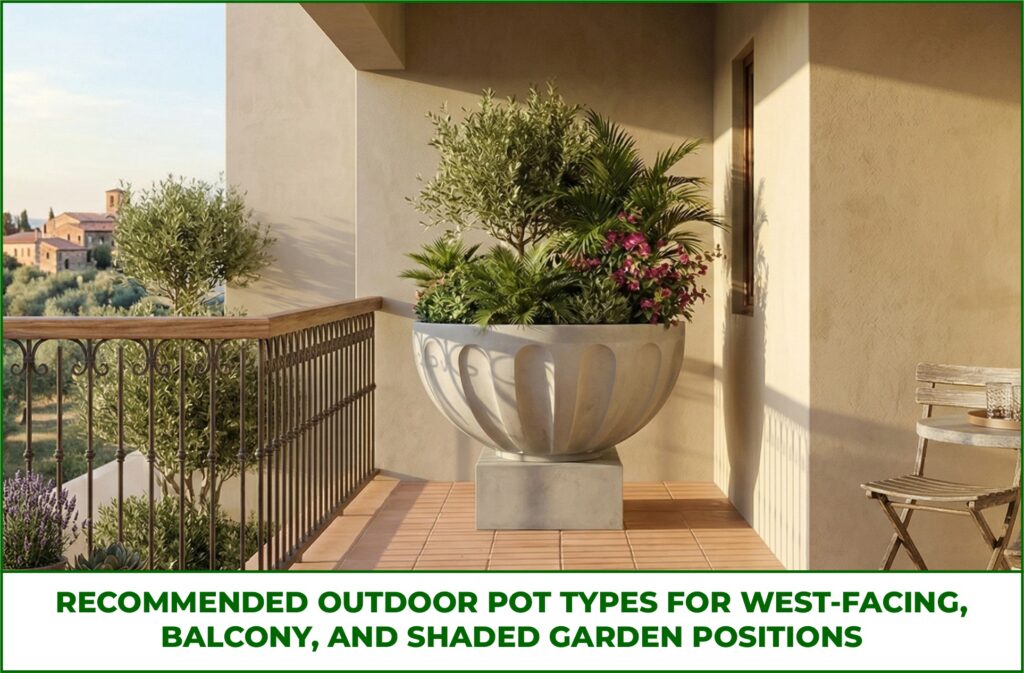
West-Facing Walls and Afternoon Sun
West-facing spots get the hottest afternoon sun in Australia. Dark-coloured pots here absorb heat all afternoon and transfer it directly to the root zone. In summer, this can damage or kill roots even in well-watered containers.
Choose light-coloured or white outdoor pots for west-facing positions from our Outdoor Emporium Shop page. Fibreglass or light concrete works well. Avoid dark terracotta or black-finished pots in these spots.
Exposed Balconies and Rooftop Gardens
Wind is the hidden problem on elevated outdoor spaces. It accelerates water loss from both the soil and the plant leaves — you may need to water twice as often as you would in a sheltered ground-level garden.
Lightweight outdoor pots work here for the weight reasons covered earlier. But go larger than you think — the extra soil volume compensates for faster evaporation.
Shaded Courtyards and Under-Eave Positions
These spots are gentler on pots and plants. More material options are available — terracotta works well, dark pots are fine, and moisture retention is less of a challenge.
The risk here is overwatering. With less evaporation, many people water on a schedule rather than checking the soil. Always check the top 3–4 cm of soil before watering — if it is still moist, wait.
5 Outdoor Pot Mistakes That Shorten Plant Life
You have bought pots for the outdoor space. Your work doesn’t end there. There are some things that you should keep in mind so that your pots and especially your plants don’t have a bad impact.
- Using dark pots in full western sun — root temperatures can spike dangerously high in summer.
- Choosing pots too small — outdoor conditions accelerate the problems of undersized containers.
- Skipping pot feet — drainage holes sitting on flat paving become blocked quickly, waterlogging the roots.
- Buying non-UV-rated plastic pots — they degrade visibly within 2 years in Australian sun.
- Placing heavy concrete pots on balconies without checking the load rating — most residential balconies have limits that concrete large outdoor pots can easily exceed.
Conclusion
Outdoor plant pots in Australia are not a passive purchase. The wrong material cracks. The wrong size starves the roots. The wrong placement cooks them.
But get those three things right and container gardening in Australian conditions is genuinely rewarding — plants grow faster, spaces transform quickly, and the flexibility of pots lets you adapt as the garden evolves.
Explore outdoor pots, large outdoor pots, and lightweight outdoor planters built for Australian conditions at Outdoor Emporium — online with delivery across Australia.