A planter box is one of those purchases people assume is simple.
Pick a size. Pick a colour. Done.
Then the tomatoes fail. The herbs bolt. The lettuce drowns after one decent rain.
The planter box was not wrong. The match between box and purpose was.
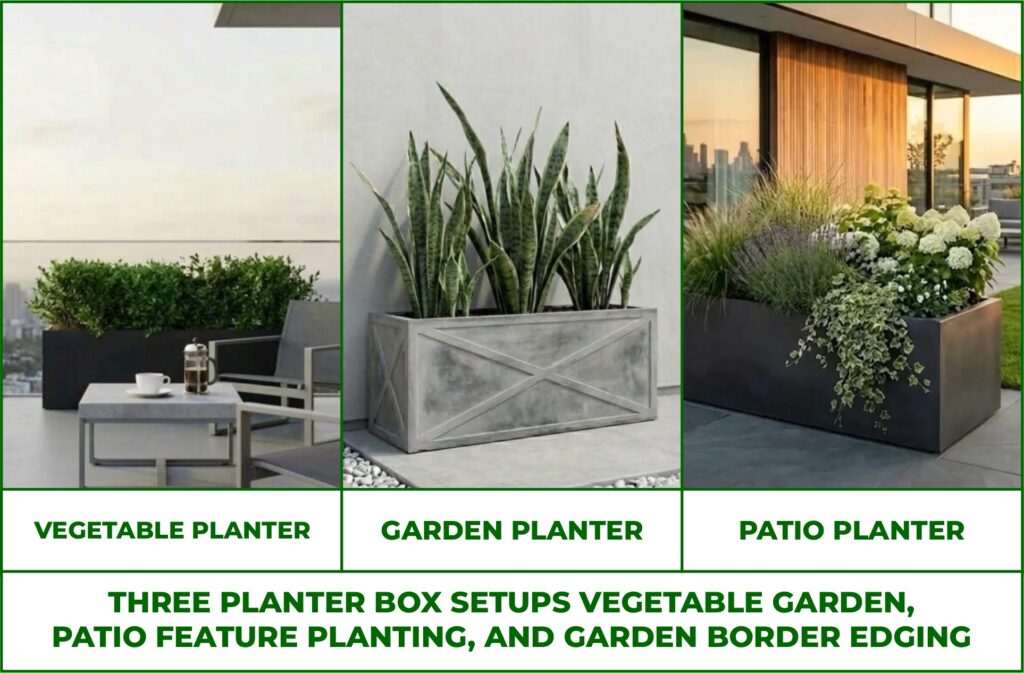
Planter boxes for vegetables need different depth, drainage, and soil volume than planter boxes used as garden border features. Patio planters need different dimensions and materials from raised garden beds. Use the wrong box for the job, and you are fighting the container all season. At Outdoor Emporium, we have brought a wide range of planter boxes so that you can have the right container for your plants.
This guide cuts through the options and tells you exactly which planter box works for which use — so you buy once and get it right.
Let’s get into reading-
What Is a Planter Box — and How Is It Different from a Pot?
A planter box is a rectangular or square container designed to hold multiple plants, a row of plants, or a continuous planting of soil. Unlike a garden pot — which is usually round and designed for a single feature plant — a planter box is designed for growing.
That distinction matters. Planter boxes are typically shallower relative to their footprint. They have more surface area exposed to air and sun. And they are usually placed on the ground, on a deck, or on a wall — rather than displayed as a standalone feature.
Sounds simple. But here is where people go wrong — not all planter boxes are designed for all uses. The one you choose for your patio herb garden should be very different from the one you use for tomatoes.
Planter Boxes for Vegetables — What the Plants Actually Need
Vegetables are demanding. They need more from a container than ornamental plants. Let’s see that in the following points-
· Depth First
Most people underestimate how much depth vegetable roots need. Leafy greens — lettuce, spinach, Asian greens — can manage in 20–25 cm of depth. But tomatoes, zucchini, capsicum, and most fruiting vegetables need 35–40 cm minimum. Root vegetables — carrots, beetroot, parsnip — need 40–50 cm. Grow a carrot in a 20 cm planter box, and you will harvest short, forked, stunted roots.
· Drainage is Non-Negotiable
Vegetables are even more sensitive to waterlogging than ornamentals. A planter box for vegetables must have adequate drainage holes across the entire base — not just one central hole. In Australian summer rain events, a poorly drained planter box can waterlog roots in under an hour.
· Width for Yield
Wider planter boxes allow more plants per row and better spacing. A 30 cm wide vegetable planter box is fine for a single row of herbs or lettuce. For tomatoes, you want 40–50 cm minimum width to allow proper support and airflow between plants.
| Vegetable | Minimum Depth | Minimum Width | Notes |
| Lettuce / leafy greens | 20 cm | 25 cm | Shallow roots — easiest to grow in planter boxes |
| Herbs (basil, parsley, chives) | 20 cm | 25 cm | Excellent in small planter boxes on patios |
| Tomatoes / capsicum | 35–40 cm | 45 cm | Need support stake — factor into box placement |
| Zucchini / cucumber | 35 cm | 50 cm+ | Spreads — needs horizontal space too |
| Carrots / beetroot | 40–50 cm | 30 cm | Depth is critical — not width |
Vegetables sorted. Now the use case that most homeowners are actually searching for — patio planting.
Planter Boxes for Patios — Different Priorities
Patio planter boxes are about appearance as much as function. Here, the priorities shift.
Material Matters More Here
Patio planter boxes are visible. Concrete planter boxes work well for a contemporary look — they are heavy, stable, and develop a natural surface character over time. Lightweight fibreglass planter boxes in concrete or stone finishes give the same aesthetic at a fraction of the weight — and can be repositioned easily as the space evolves.
For deck or balcony patios, always consider the weight. Concrete planter boxes can be very heavy when filled with wet soil — a 60 cm concrete planter box filled and watered can weigh 80–100 kg.
Height and Proportion
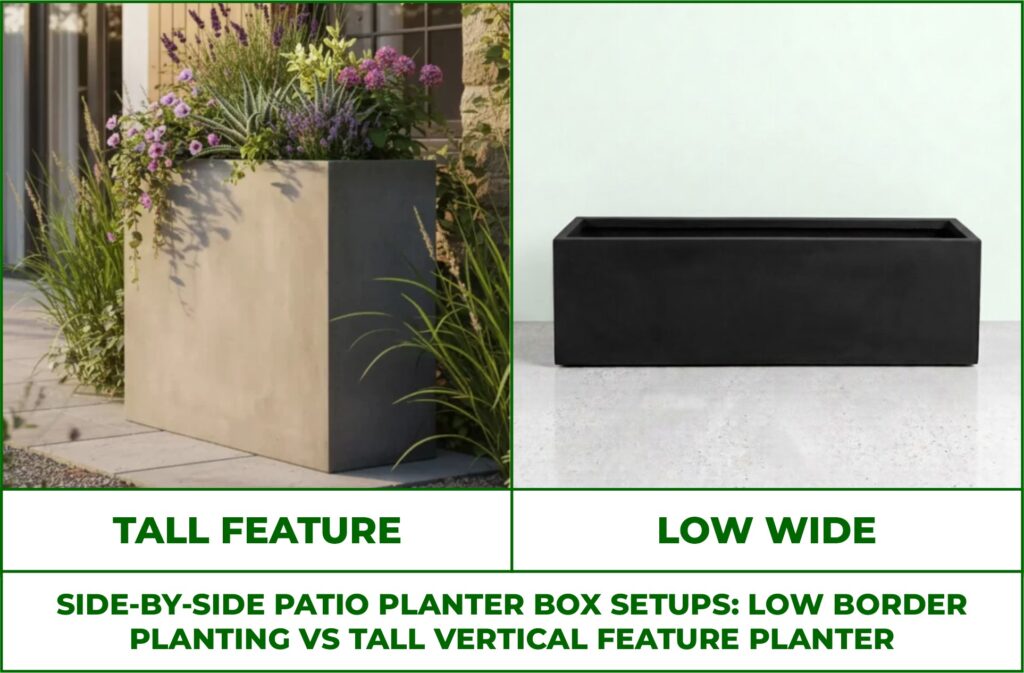
On patios, proportion matters. A low, wide planter box along a fence line creates a contained, structured look. Tall planter boxes used as vertical features add height and can screen neighbouring properties or define zones within an outdoor living area.
Planter Boxes for Garden Borders and Beds
In the garden proper, planter boxes are used to define edges, create raised beds, and separate planting zones. Here, durability is the priority over aesthetics.
Timber looks natural but requires maintenance and can harbour pests. Concrete and composite planter boxes for garden use are maintenance-free, will not rot, and last indefinitely in outdoor conditions. For garden beds, concrete is the most practical choice.
Width is the key dimension here — 40–60 cm wide garden planter boxes allow comfortable reach from both sides without stepping in.
The best garden planter box is not the one that looks the most natural. It is the one you never have to replace.
Conclusion
Planter boxes are versatile. But versatile does not mean interchangeable.
A vegetable planter box needs depth and drainage above all else. A patio planter box needs material and proportion. A garden border planter box needs durability. Match the box to the brief and the results are reliable.
Explore the full range of planter boxes — outdoor, garden, vegetable, and patio styles — at Outdoor Emporium, with delivery available across Australia.