
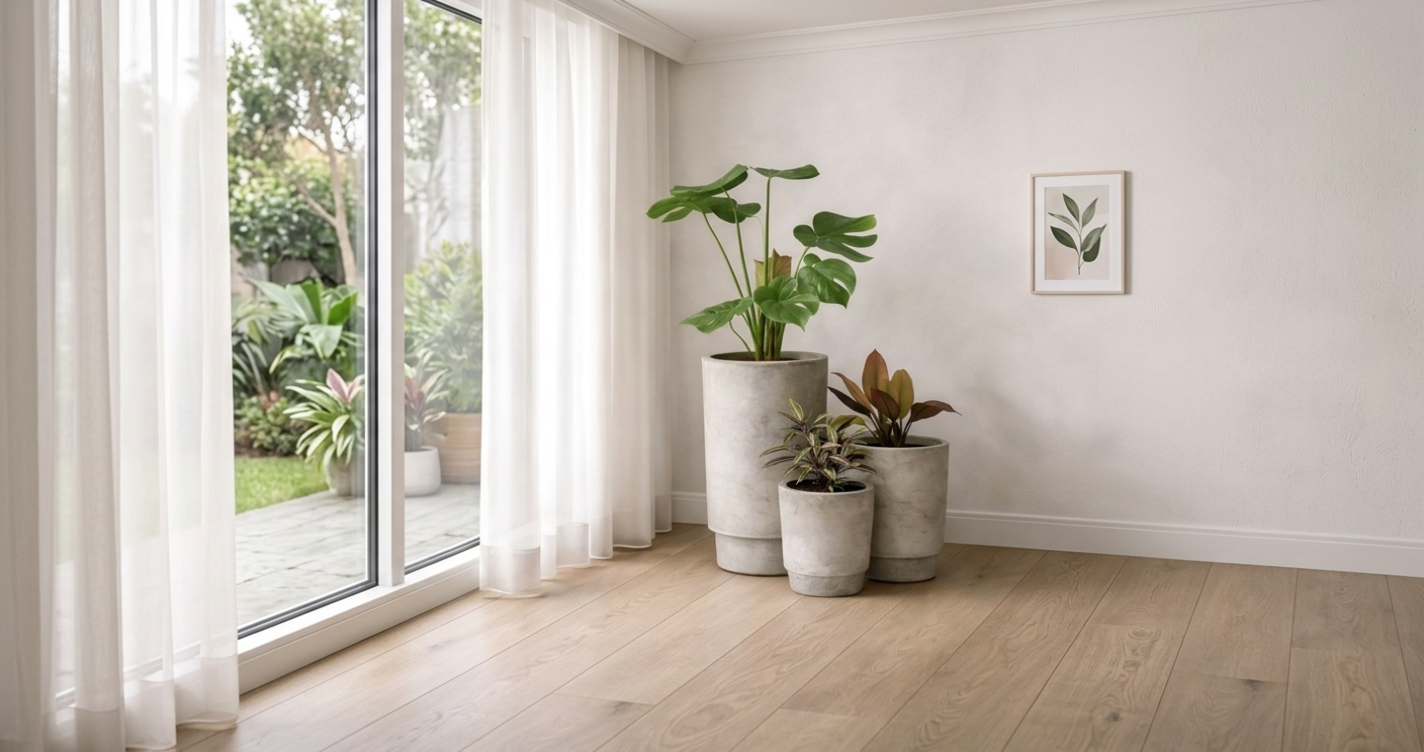
A small planter box can grow a very useful herb garden. The key is not squeezing in as many plants as possible—it is giving each herb enough soil, drainage and sunlight to perform properly.
For balconies, courtyards and compact gardens, planter boxes make good use of narrow spaces and keep herbs close to the kitchen. They are also easier to manage than a garden bed. But because there is less soil, they dry out faster and leave less margin for neglect during hot weather.
Why planter boxes work well for herbs
- They fit neatly along walls, balcony edges and courtyard boundaries.
- Several compatible herbs can be grouped in one container.
- The soil and drainage can be controlled more easily than in a garden bed.
- They bring herbs to a comfortable height and closer to where they are used.
- The planter itself can become part of the overall garden design.
The trade-off is simple: smaller planters need more regular attention. A compact box can work beautifully, but it will heat up and dry out faster than a large container.
Choosing the right size
Depth is more important than it first appears. A very shallow box may look suitable when the herbs are young, but it holds less moisture and gives roots nowhere to go as the plants mature.
As a practical starting point, allow about 20 cm of soil depth for compact herbs and 25–30 cm for larger or deeper-rooted plants. More soil volume generally means more stable moisture and less stress in summer.
| Herb | Useful starting depth | OE advice |
| Chives | 15–20 cm | Compact and well suited to smaller boxes. |
| Parsley | 20–25 cm | Give it reasonable depth and steady moisture. |
| Basil | 20–25 cm | Likes warmth, sun and regular watering. |
| Thyme | 20 cm+ | Prefers excellent drainage and drier conditions. |
| Mint | 25 cm+ | Grow separately—it will take over a shared box. |
| Rosemary | 25–30 cm+ | Choose a larger planter if it will remain long term. |
| Coriander | 25–30 cm | Deeper soil and afternoon protection help in hot weather. |
These measurements are a guide rather than a guarantee. Plant variety, climate, aspect and watering habits all matter. When choosing between two sizes, the larger planter is usually the more forgiving option.
Material matters—especially in Australian conditions
Fibreglass and composite planters
Fibreglass planters are a practical choice for balconies and courtyards because they are considerably lighter than concrete while still offering the look of a substantial architectural planter. They are easier to move and place less load on elevated spaces.
Concrete planters
Concrete has weight, presence and excellent durability. It suits permanent positions and exposed sites where a lighter planter may move. The downside is obvious: once filled, it is difficult to reposition and may be unsuitable for some balconies.
Terracotta and kiln-fired pots
Terracotta is breathable and works particularly well with Mediterranean herbs such as thyme, oregano, sage and rosemary. It also dries faster, which means small pots can demand frequent watering through a Melbourne heatwave.
Timber planter boxes
Timber brings warmth to a garden, but the quality of the timber and construction matters. Untreated softwood will not last indefinitely outdoors. Check how the planter is lined, how water can escape and whether the material is suitable for growing edible plants.
Drainage is non-negotiable
Healthy herbs need water, but they do not want their roots sitting in it. Every planter used outdoors should have adequate drainage holes and a clear path for water to escape.
- Check the drainage holes before planting.
- Keep the holes clear with mesh or a suitable filter layer.
- Use pot feet where necessary so the base is not sealed against paving.
- Use a saucer indoors, but do not leave the planter standing permanently in collected water.
- For long planter boxes, make sure drainage is distributed across the base.
A deep layer of gravel does not fix poor drainage. It simply reduces the amount of useful potting mix. Good holes, the right growing medium and a free-draining base are what matter.
Use potting mix—not garden soil
Garden soil becomes dense and airless inside a container. Use a quality potting mix intended for herbs or vegetables and follow the manufacturer’s directions. The mix should hold enough moisture to support the plants while still allowing excess water to drain away.
Over time, potting mix settles and loses structure. Top it up when needed and replace tired mix rather than expecting the same soil to perform indefinitely.
Position: light first, appearance second
Most culinary herbs need good light. In Australia, a north-facing position generally receives the most reliable sun, but the best location still depends on the herb and the season.
- Basil, rosemary, thyme, oregano and sage generally prefer a bright position.
- Parsley, mint and chives can tolerate some protection from harsh afternoon sun.
- Coriander often bolts quickly in heat and benefits from afternoon shade in summer.
- High balconies may have plenty of light but also drying wind.
- Indoor herbs need a genuinely bright window—not simply a well-lit room.
Herbs that can share a planter
The best combinations are not based on appearance. Group herbs with similar watering and sunlight requirements.
| Combination | Why it works | Watch for |
| Thyme, oregano and sage | All prefer sun, drainage and comparatively dry soil. | Do not overwater. |
| Basil, parsley and chives | Similar preference for regular moisture and good light. | Allow enough room for basil to spread. |
| Rosemary, thyme and oregano | A useful Mediterranean mix for a larger sunny planter. | Rosemary eventually needs more space. |
| Mint on its own | Containing the roots stops it overwhelming other herbs. | It still needs regular pruning. |
Self-watering planters: useful, but not automatic
A self-watering planter can be very useful for thirsty herbs or households that cannot water every day. The reservoir gives plants access to moisture for longer and can reduce the sharp wet-dry cycle common in small containers.
It is not a reason to ignore the planter. Reservoirs still need checking, drainage still matters and Mediterranean herbs may prefer a more freely draining setup. Choose the system to suit the plants—not simply because it promises less maintenance.
Balcony considerations
On a balcony, weight and wind matter as much as plant choice. Soil and water add considerable weight to any planter. If the location is elevated or the planter is unusually large, check the building requirements before installation.
- Use lightweight fibreglass or composite planters where weight is a concern.
- Place tall or narrow planters where wind cannot easily overturn them.
- Protect paving and waterproof membranes with suitable feet or trays.
- Make sure drainage water will not affect neighbours below.
- Avoid fixing planters to railings unless the system is designed and rated for that use.
Watering and ongoing care
There is no honest watering schedule that suits every Australian balcony. Planter size, material, wind, temperature and sun exposure all change how quickly the soil dries.
Check the mix with your finger. If the top few centimetres are dry, water thoroughly and allow the excess to drain. In very hot weather, small planters may need checking morning and evening. In winter, the same planter may need far less water.
- Harvest regularly to encourage fresh growth.
- Remove flowers from basil if you want to extend leaf production.
- Feed according to the potting mix and fertiliser instructions.
- Replace plants that have become woody, exhausted or root-bound.
- Rotate movable planters if growth becomes one-sided.
Frequently asked questions
Choosing a planter from Outdoor Emporium
Start with the space, then choose the planter. Measure the available length and width, consider the final weight, and decide whether the planter needs to be moved in future. From there, compare material, depth, drainage and finish.
Outdoor Emporium carries planters for balconies, courtyards and larger garden settings. If you are unsure about scale, send us a photograph and the dimensions of your space. We can help narrow down the sizes and shapes that will work properly.
Final advice. A successful herb planter does not need to be complicated. Give the plants enough soil, make sure water can escape, group compatible herbs and place the planter where the light is right. Get those basics right and a small space can produce a surprisingly useful kitchen garden.