

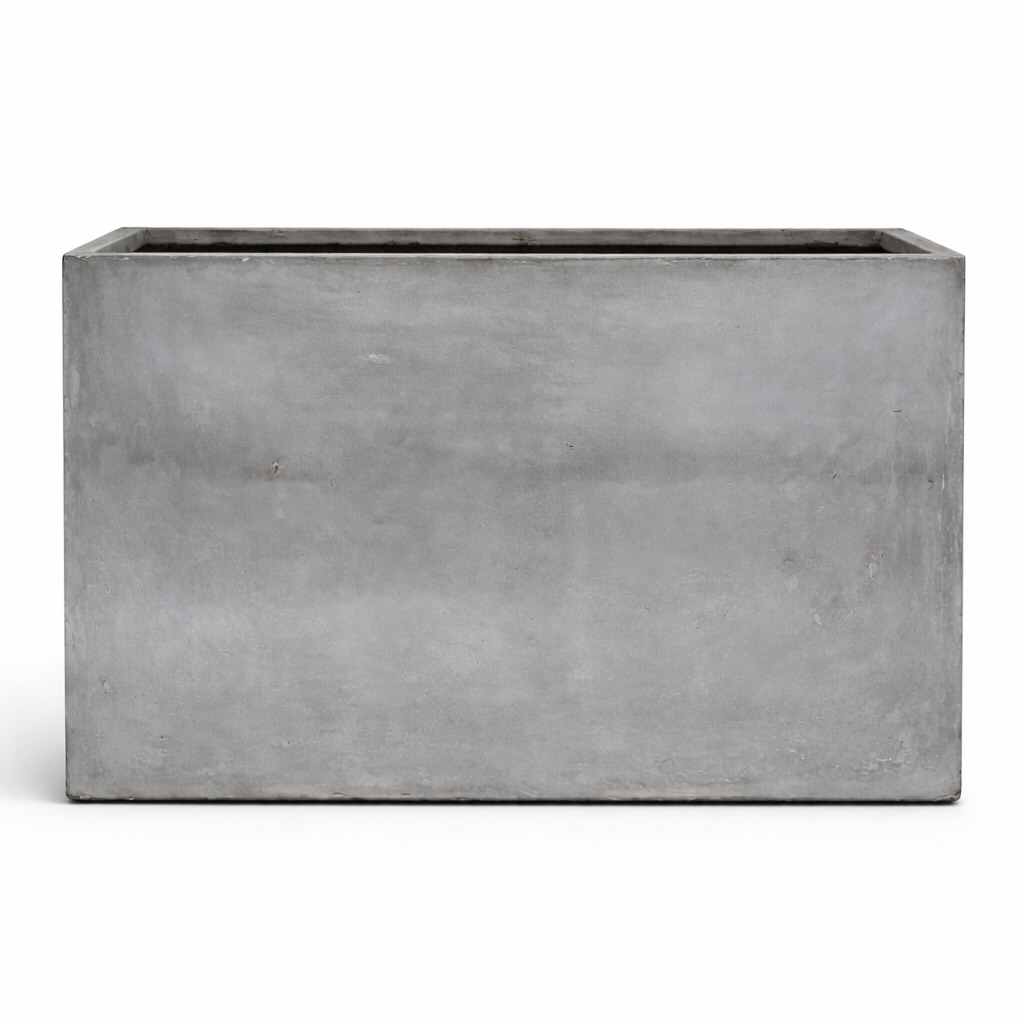
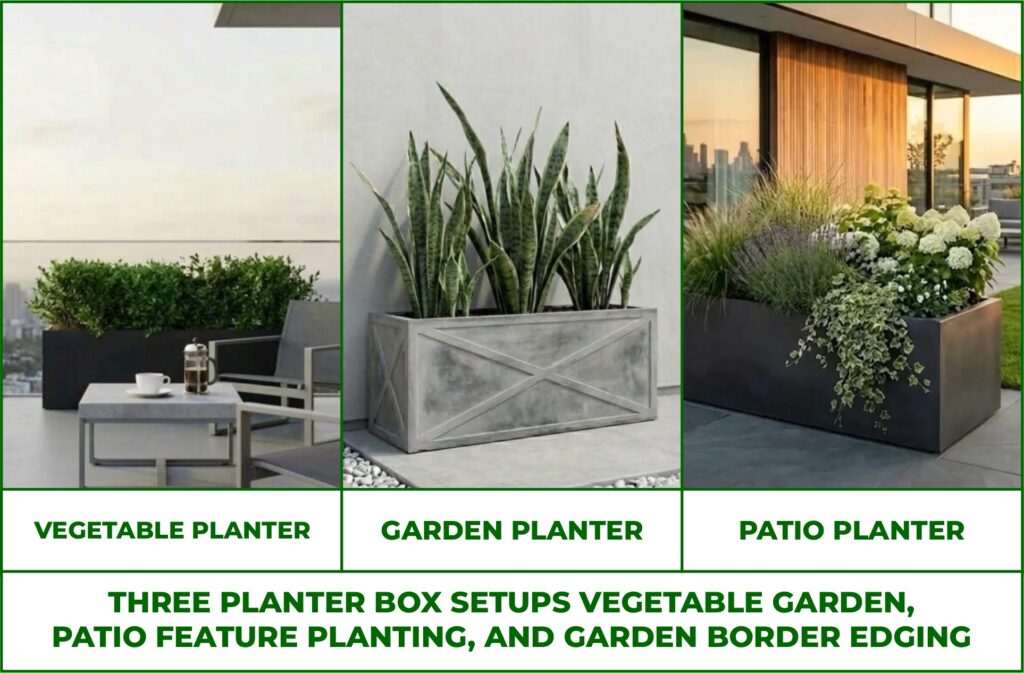
If you’ve been looking at square planter boxes and wondering which material, size, or style is actually going to last in your outdoor space — this guide is for you. We’ve cut through the generic advice and focused on what genuinely performs in Australian conditions: the UV intensity, Melbourne’s freeze-thaw winters, coastal salt air, and the tropical rainfall patterns that make container gardening genuinely challenging here.
Whether you’re fitting out a Fitzroy courtyard, a beachside garden in Torquay, a balcony in Docklands, or a sprawling backyard in Melbourne’s outer eastern suburbs, there’s a specific square planter box solution that will outperform every other option for your conditions. Let’s get into it.
What Makes a Great Square Planter Box for Australian Outdoors?
The square profile is not just an aesthetic choice — it’s a practical one. Square planter boxes pack more planting volume into a given footprint than round pots of equivalent diameter. They align naturally with architectural elements: paving grids, deck boards, fences, and rendered walls. They stack and arrange cleanly in twos, threes, and rows. And the flat base means they sit stable on any level surface without the tipping risk of tall round pots.
But beyond geometry, what separates a square planter box that thrives in Australian outdoor conditions from one that cracks, fades, or rots within two seasons? Four factors define it:
- UV resistance — Australia’s UV Index is among the highest in the world for a temperate climate. Standard plastics and resins degrade, yellow, and become brittle under sustained UV exposure. UV-stabilised materials are the baseline requirement for any outdoor planter box.
- Structural integrity under thermal cycling — in Melbourne, outdoor surfaces can reach 70°C in direct sun in summer and fall below zero in winter. Materials that expand and contract at different rates (thin timber, standard concrete with inadequate reinforcement) develop cracks at joints and corners over multiple seasons.
- Drainage design — a square planter box with inadequate drainage is a waterlogging risk. In Melbourne’s spring rainfall events, a poorly drained box can kill a healthy plant in under 24 hours. The drainage system needs to be designed for the box’s footprint, not an afterthought.
- Root insulation — a dark-coloured square planter box in a north-facing, paved position can reach soil temperatures of 55–60°C in peak summer. That temperature cooks roots. Lighter colours, insulating materials, and strategic placement all matter for plant health in Australian summers.
Material Comparison: Wood, Composite, Metal, Concrete, and Recycled Options
Material choice is the single most consequential decision in selecting a square planter box for Australian outdoor conditions. Here’s what each option actually gives you — not what the catalogue says, but what it does over time in a Melbourne garden:
Treated Hardwood & Recycled Timber
Treated hardwood square planter boxes are a perennial favourite in Australian gardens, and for good reason. The warm, natural grain reads well against almost any planting — herbs, natives, ornamentals. A well-built timber planter box joins beautifully with the Australian outdoor aesthetic, from coastal weatherboard homes to contemporary hardwood decks in Melbourne’s inner east.
The caveat is maintenance. Untreated or poorly treated timber in Australian outdoor conditions will begin to grey, split, and deteriorate within three to five years. Quality treated hardwood (typically with a non-toxic, water-based preservative for food-garden applications) extends this significantly — quality hardwood planter boxes can last 10–15 years with periodic oiling and sealing every two to three years.
For vegetable gardens specifically, lining timber planter boxes with food-safe barrier membrane prevents direct soil-to-timber contact, extends box life, and prevents leaching of any timber treatment into the growing medium. This is standard practice for timber vegetable planter boxes in Australia.
- Best for: veggie gardens, herb displays, naturalistic garden styles
- Maintenance: oil/seal every 2–3 years; inspect joints annually for moisture damage
- Climate caution: avoid in alpine frost zones or tropical climates without high-quality treatment and regular maintenance
- Not recommended: thin-wall pine or untreated softwood for permanent outdoor placement
Composite Concrete (GRC) Square Planters
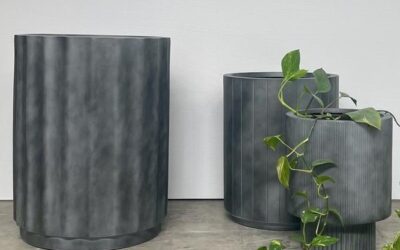
Glass Reinforced Concrete (GRC) is the benchmark material for permanent outdoor square planter boxes in Australia in 2026. The glass fibre matrix within the concrete prevents the crack propagation that affects plain cast concrete under Melbourne’s freeze-thaw cycling. The result is a material that handles Australian conditions — UV, frost, coastal salt air, thermal cycling — without requiring maintenance or protective treatment.
For square planter boxes specifically, GRC’s mouldability allows clean, precise corners and flat faces that round pots can’t achieve. The squared geometry in composite concrete is architecturally convincing — it reads as a built element rather than a container. This is why GRC square planters are the default specification for commercial landscapes, developer projects, and design-led residential projects across Melbourne.
In Melbourne’s frost-affected suburbs — Eltham, Research, Hurstbridge, and across the Dandenong Ranges — GRC square planters remain outdoors year-round without any seasonal management. They don’t crack, don’t fade, and develop a natural patina that improves their appearance over time.
- Best for: permanent installations, commercial landscapes, frost zones, coastal properties
- Maintenance: annual rinse; diluted white vinegar for moss removal. Never bleach.
- Climate rating: all Australian zones including alpine frost and tropical humidity
See Outdoor Emporium’s concrete planter range for current GRC square planter sizes and finishes.
UV-Stabilised Fibreglass Square Planters
For square planter boxes in weight-restricted applications — balconies, rooftop gardens, elevated decks — UV-stabilised fibreglass is the practical answer. A large GRC square planter can weigh 25–35kg empty. The fibreglass equivalent at the same dimensions weighs 4–7kg. On a Melbourne apartment balcony with a structural load rating of 200kg per square metre (typical for buildings constructed pre-2005), that difference directly determines how many plants and planters the space can carry.
Modern fibreglass square planters replicate the finish of concrete and stone convincingly. UV stabilisation prevents the yellowing and surface degradation that affects standard resin over two to three Australian summers. A quality UV-stabilised fibreglass square planter box should maintain its finish for 10–15 years in full sun.
- Best for: balconies, rooftop terraces, rental properties, commercial fit-outs
- Maintenance: wipe with mild soapy water; annual UV protectant spray extends surface life
- Climate rating: all Australian zones; excellent coastal salt-air resistance
Browse Outdoor Emporium’s outdoor planter range for fibreglass square planter options.
Metal Square Planters (Corten Steel & Powder-Coated)
Corten steel — the weathering steel alloy that develops a characteristic rust-orange patina — has become a sought-after material for square planter boxes in contemporary Australian landscape design. The material’s self-protective oxide layer means that once the patina stabilises (typically within 18–24 months in Melbourne’s conditions), it requires no further treatment and has effectively unlimited outdoor lifespan.
The key practical consideration for Corten square planters is placement. During the initial weathering period, rain runoff from the surface carries iron oxide that will stain concrete, limestone, and light-coloured paving permanently. This makes Corten planters unsuitable for placement on premium paving without a protective barrier underneath during the weathering period.
Powder-coated steel square planters offer similar geometric precision in a wider colour range without the weathering period. The coating needs periodic inspection for chips or damage — exposed bare steel in coastal Melbourne conditions will begin surface rusting within one to two seasons.
- Best for: contemporary design landscapes, feature garden elements, durable screening planters
- Maintenance: Corten — essentially zero after weathering. Powder-coat — inspect and touch-up chips annually.
- Climate caution: avoid unprotected mild steel within 1km of coastline
Recycled Composite & Plastic Lumber Square Planters
Recycled composite lumber — typically made from post-consumer HDPE plastic and wood fibre — has become a credible option for square planter boxes in the Australian market. The material doesn’t rot, doesn’t require sealing or oiling, and holds its structural integrity in outdoor conditions for 15–20+ years. For sustainability-focused homeowners and landscape projects with environmental certifications, recycled composite is increasingly specified.
Aesthetically, early generations of recycled composite had a plastic-looking surface that didn’t translate well into premium garden settings. Current-generation products have improved significantly, with textured finishes that better approximate timber grain. They remain unconvincing as a premium garden element compared to treated hardwood, but for durability and low maintenance they’re a serious option.
- Best for: sustainability-focused projects, low-maintenance gardens, vegetable planters
- Maintenance: essentially zero — wash with water and mild detergent as needed
- Climate rating: excellent in all Australian zones; no frost or UV degradation issues
Quick Comparison: Square Planter Box Materials at a Glance
| Material | UV Resistance | Frost Tolerance | Weight | Est. Lifespan | Maintenance | Best Climate |
|---|---|---|---|---|---|---|
| GRC / Composite Concrete | ✓ Excellent | ✓ Excellent | Medium | ✓ 15–20+ yrs | Very low | All zones |
| UV-Stabilised Fibreglass | ✓ Excellent | ✓ Good | Very light | ✓ 10–15 yrs | Very low | All zones |
| Treated Hardwood | ~ Good (sealed) | ~ Moderate | Medium | 10–15 yrs (maintained) | Medium | Mild–temperate |
| Corten Steel | ✓ Excellent | ✓ Excellent | Heavy | ✓ 20–30+ yrs | Very low | All (not near coast) |
| Powder-Coated Steel | ✓ Good | ✓ Good | Heavy | 10–20 yrs | Low–Medium | Non-coastal |
| Recycled Composite | ✓ Good | ✓ Good | Light | ✓ 15–20 yrs | Very low | All zones |
| Standard Resin / Plastic | ✗ Poor | ~ Moderate | Very light | ✗ 2–4 yrs | Low | Sheltered only |
🪴 Find Your Ideal Square Planter Box
Answer 6 quick questions and get a personalised recommendation matched to your Australian climate zone and outdoor space.
How Square Planter Boxes Perform Across Australian Climate Zones
Australia’s climate diversity is one of the most complex challenges in outdoor product selection. The Bureau of Meteorology classifies Australia into six major climate zones — and what performs in one zone often fails in another. Here’s the practical guide for square planter boxes:
Temperate — Melbourne and Southern Victoria
Melbourne’s temperate-oceanic climate (Köppen Cfb) is characterised by mild wet winters, warm-to-hot dry summers, and significant UV intensity from November through March. Frost is regular in inland and elevated suburbs from June to August. The ideal square planter box for Melbourne must handle the full range: frost tolerance, UV stability, and resistance to thermal cycling between cold nights and 38°C-plus days.
Top performers: GRC/composite concrete and UV-stabilised fibreglass. Avoid outdoors year-round: standard resin, unlined thin timber in frost zones, uncoated mild steel.
Coastal — Bayside Melbourne, Mornington Peninsula, Surf Coast
Salt-laden sea air is the defining challenge. It accelerates metal corrosion, degrades standard resins, and creates a surface deposit on porous materials that promotes degradation. UV-stabilised fibreglass and GRC are the preferred materials. Corten steel should be positioned to avoid run-off onto premium paving — the weathering process in salt air can be more aggressive than in inland settings during the initial patination phase.
Top performers: GRC, UV-stabilised fibreglass. Avoid: powder-coated steel without annual inspection, standard resin, untreated mild steel.
Tropical — Queensland and Northern Territory
Intense UV, high humidity, and monsoonal rainfall are the primary challenges. Timber planter boxes without exceptional treatment deteriorate rapidly — the combination of heat, humidity, and wet-dry cycling promotes rapid biological decay. GRC and fibreglass both perform well. Recycled composite lumber is also a strong performer, resisting biological decay entirely.
Top performers: GRC, UV-stabilised fibreglass, recycled composite. Avoid: untreated or standard treated timber, standard resin.
Arid and Semi-Arid — Inland Victoria, Western NSW, SA
Extreme temperature swings and high UV intensity. Thermal mass management becomes critical — dark coloured square planter boxes in full sun in these zones will heat root zones to damaging levels. Light-coloured GRC and fibreglass, placed with an east or south aspect where possible, are the recommended choices.
Top performers: Light-coloured GRC, UV-stabilised fibreglass in pale tones. Avoid: dark concrete in full sun, standard resin.
Square Planter Boxes for Melbourne Outdoor Spaces: Climate-Specific Considerations
Melbourne’s gardens face a specific set of challenges that most generic gardening advice underestimates. The four-seasons-in-a-day cliché exists because it’s real: the Bureau of Meteorology records temperature ranges of 20°C or more within a single day in Melbourne during spring and autumn. For square planter boxes, these are the specific Melbourne factors worth building into your selection:
Frost Management for Melbourne Suburbs
Melbourne’s inner suburbs (within 10–12km of the CBD) receive few hard frosts due to the urban heat island effect. But suburbs like Eltham, Montmorency, Research, Warrandyte, Templestowe, and the full extent of the Dandenong Ranges regularly record overnight temperatures of −2°C to −5°C in June and July. Any square planter box placed outdoors permanently in these suburbs must be frost-rated. For timber planter boxes, this means ensuring no standing water can pool at the base between boards — moisture that freezes at board joints accelerates deterioration significantly.
UV Management for North-Facing Positions
Melbourne’s UV Index averages 9–10 through December and January and peaks at 12–13 on clear summer days. Square planter boxes positioned on north-facing paving, white rendered walls, or light-coloured concrete surfaces are exposed to both direct UV and significant reflected radiation. For these positions, UV-stabilised materials are non-negotiable. Light-coloured materials also reduce soil temperature — a critical consideration for heat-sensitive plants.
Drainage for Melbourne’s Rainfall Patterns
Melbourne’s rainfall is irregular and can be intense — 40–60mm events in a few hours are not uncommon in summer and autumn. Square planter boxes for Melbourne outdoor spaces should have drainage holes equivalent to at least 1% of the internal base area, and should be elevated on pot feet or risers to prevent base saturation and ensure free drainage.
Looking for Square Planter Boxes Built for Australian Conditions?
Outdoor Emporium stocks a curated range of garden planters and planter boxes selected specifically for Australian climate performance.
Browse Garden Planters →Sizing Square Planter Boxes: What You Actually Need
Square planter boxes are available in a wide range from compact 20cm herb boxes to architectural 100cm statement planters. Here’s a practical sizing guide matched to use:
| Size (Internal) | Best Use | Suitable Plants | Min. Depth | Notes |
|---|---|---|---|---|
| 20–30cm | Herbs, succulents | Basil, mint, echeveria | 20cm | Window sills, balcony rails |
| 30–40cm | Herbs, leafy greens | Lettuce, spinach, chives | 25cm | Patio tables, grouped arrangements |
| 40–60cm | Vegetables, small shrubs | Tomatoes, capsicum, lavender | 35–40cm | Most versatile size for Melbourne courtyards |
| 60–80cm | Shrubs, screening, feature plants | Lilly pilly, photinia, olive | 40–50cm | Ideal for screening and hedge planting |
| 80–100cm+ | Feature trees, statement planting | Standard roses, small palms, ornamental pear | 50cm+ | Architectural statement pieces; consider GRC for permanence |
Installation and Placement: What to Know Before You Buy
Weight and Structural Load
A large square planter box filled with potting mix weighs significantly more than the empty product specification suggests. A 60cm GRC square planter weighing 20kg empty typically weighs 70–90kg once filled and planted. For balconies and raised decks, confirm your structural load rating with a building engineer or the building’s body corporate before installation. Weight-sensitive applications should default to UV-stabilised fibreglass or recycled composite.
Drainage and Surface Protection
Square planter boxes placed directly on paving or timber decking without drainage clearance can cause surface staining, moisture damage, and paving degradation over time. Pot feet or risers (20–40mm height) are recommended for all square planter boxes outdoors. This is especially important on timber decking, where trapped moisture under a flat-base planter creates conditions for surface mould and structural decay.
Arrangement and Composition
Square planter boxes reward deliberate arrangement. Three square planters in the same material but at different scales — large, medium, small — create a layered visual depth that reads as designed. Running a row of identical square planters along a fence or wall creates a contemporary hedge-planting effect with visual uniformity. Outdoor Emporium’s garden planter range includes consistent finishes across multiple sizes.
Melbourne Regulations and Practical Restrictions
In Victorian apartments, body corporate rules may restrict modifications to common property, including the placement of large, heavy planters on shared outdoor areas. In heritage overlay zones across inner Melbourne (Fitzroy, Carlton, South Yarra, Prahran), local council guidelines may affect front garden presentations. Check with your council or body corporate before placing large square planter boxes in shared or semi-public areas. For verge planting, Melbourne City Council and inner-suburban councils have specific requirements — most allow planting with permission but restrict permanent fixed installations.
Maintenance and Care Requirements by Material
Understanding maintenance requirements before purchase saves ongoing time and money. Here’s what each square planter box material genuinely demands in Melbourne’s outdoor conditions:
GRC and Composite Concrete Square Planters
Annual rinse with water handles most cleaning. For moss, lichen, or mineral deposits (more common in Melbourne’s wetter southern and bayside suburbs), a diluted white vinegar solution applied with a soft brush and rinsed thoroughly is effective. Avoid bleach — it discolours composite concrete surfaces permanently. No sealing, oiling, or protective treatment is required. Patina development is natural and desirable.
Treated Hardwood Square Planter Boxes
Oil with an appropriate exterior timber oil every two to three years. In Melbourne’s harsher UV conditions (north-facing, full-sun positions), inspect annually — UV degradation of the oil layer accelerates surface greying and drying. Inspect all corner joints at the start of each winter for moisture entry points — these are the first failure points in timber planter boxes. Apply a joint sealant if any gaps are opening. For vegetable planter boxes, inspect the internal liner (if fitted) annually and replace if cracked or perforated.
Fibreglass Square Planters
Wipe with mild soapy water as needed. For pots in full-sun positions, an annual application of UV protectant (car-grade UV protectant spray available from automotive retailers) extends surface quality. Avoid abrasive scrubbers that scratch the surface finish and accelerate UV degradation of the surface layer. Inspect annually for surface micro-cracks, which indicate UV stabiliser depletion approaching end of service life.
Corten Steel Square Planters
During the initial 18–24 month weathering period in Melbourne conditions, protect surrounding surfaces from iron oxide run-off with temporary rubber matting or remove the planter temporarily during heavy rain. Once the patina stabilises, essentially zero maintenance is required. Do not paint, seal, or coat Corten — any attempt to modify the surface disrupts the weathering chemistry. Simply allow the material to weather.
Recycled Composite Square Planters
Hose down with water and mild detergent as needed. No oiling, sealing, or UV treatment required. Inspect annually for any surface wear where the composite texture has been abraded — exposed fibre near drainage holes is common and cosmetic only; it doesn’t indicate structural failure.
Using Square Planter Boxes for Vegetables in Melbourne
Square planter boxes are ideal for vegetable growing — the geometry maximises growing area relative to footprint, and the contained form makes soil and water management straightforward. But vegetable growing in square planter boxes imposes specific requirements that ornamental applications don’t:
- Food-safe materials: for planter boxes in direct contact with edible crops, avoid treated timber where the treatment agent has not been verified as non-toxic (look for ACQ or copper azole treatments, which are considered food-safe after the initial curing period). Composite concrete, fibreglass, and recycled HDPE composite are food-safe without any treatment concerns.
- Drainage density: vegetable roots are particularly sensitive to waterlogging. Multiple drainage holes across the entire base — not just the corners — are essential. For square planter boxes 60cm and above, a minimum of four drainage holes at 25mm diameter is a reasonable starting specification.
- Soil volume: the square format is generous with soil volume relative to footprint. A 60cm x 60cm x 40cm deep square planter holds approximately 120–140 litres of growing medium — sufficient for four tomato plants or a dense row of mixed vegetables.
- Heat management: in Melbourne’s summer, a dark-coloured square planter box in a north-facing position will significantly heat the root zone. Light-coloured or natural-finish square planters, or the use of a shade cloth cover over the box during peak heat days, protect vegetable roots effectively.
For detailed guidance on matching planter box types to specific vegetable and patio applications, the Outdoor Emporium planter boxes guide covers depth, drainage, and width requirements for each use case.
Cost and Long-Term Value Comparison
Total cost of ownership over five to ten years is more instructive than purchase price alone when evaluating square planter boxes. A budget resin planter box that requires replacement every three to four years in Australian outdoor conditions costs significantly more over a decade than a quality GRC box purchased once.
The cost hierarchy broadly follows material and manufacturing quality:
- Entry-level: standard resin and plastic square planter boxes. Lowest upfront cost. Short outdoor lifespan in Australian UV conditions. Suitable for seasonal or sheltered use only — not recommended for permanent outdoor placement.
- Mid-range: treated hardwood, recycled composite, UV-stabilised fibreglass. Good total cost of ownership when material is matched correctly to climate zone. The right fibreglass or composite timber box, properly maintained, delivers 10–15 years of reliable performance.
- Premium: GRC/composite concrete, Corten steel, quality powder-coated steel. Highest upfront investment. Lowest total cost of ownership over 15–25+ years. Correct choice for permanent installations, commercial landscapes, and design-led residential projects.
When evaluating, cost per year of expected service life is the most useful metric. A GRC square planter box that lasts 20 years without maintenance often represents equivalent or better lifetime value than two successive mid-range timber or fibreglass boxes over the same period.
Design and Aesthetic Options for Square Planter Boxes
The square format is inherently architectural — it works with geometry rather than against it. Here’s how different aesthetic directions use square planter boxes in Melbourne outdoor spaces:
Contemporary / Minimal
Charcoal or slate GRC square planters with clean, unadorned faces. Planted with architectural grasses, Phormium, or olive standards. Works with rendered walls, concrete paving, dark timber cladding, and the contemporary residential stock of Melbourne’s inner west and inner north. The squared geometry aligns precisely with paving joints and deck board lines — composing cleanly.
Natural / Warm
Treated hardwood in spotted gum or merbau with warm, natural grain. Planted with productive gardens (herbs, vegetables) or a naturalistic planting palette (natives, grasses, flowering perennials). Works in gardens with the established Australian aesthetic — coastal weatherboard, brick cottages, or the heritage terrace housing of Carlton, Fitzroy, and Northcote.
Industrial / Raw
Corten steel square planters or raw-finish concrete in a contemporary garden design. Planted with bold architectural species — dwarf banana, agave, structural natives. Works in renovated industrial-style properties and the contemporary architectural residential market across Melbourne’s inner suburbs.
Classic / Traditional
White or cream powder-coated steel or rendered composite square planters. Formal plantings — clipped box, standard topiary, formal hedging. Works in established garden contexts with period architecture across Melbourne’s inner east (Canterbury, Hawthorn, Camberwell) and Mornington Peninsula properties.
Frequently Asked Questions: Square Planter Boxes in Australia
Which Square Planter Box Is Right for Your Outdoor Space?
Square planter boxes are among the most practical and versatile elements in the modern Australian outdoor space — but only if the material, size, and drainage design are matched to the specific conditions of the space. Here’s the short version of everything covered above:
- Permanent outdoor installation in Melbourne or southern VIC: GRC or composite concrete. Frost-rated, UV-stable, minimal maintenance — the definitive choice for long-term outdoor performance.
- Balcony, rooftop, or weight-restricted space: UV-stabilised fibreglass. Genuine climate performance without the weight penalty.
- Vegetable and herb garden: treated hardwood or recycled composite. Practical root volume, food-safe, and a natural aesthetic that works in the garden.
- Contemporary architectural garden: GRC or Corten steel. The square geometry in these materials integrates with built forms convincingly.
- Classic or heritage Melbourne garden: hardwood or white composite square planters for a formal aesthetic that suits period architecture.
At Outdoor Emporium, the range of outdoor pots and planters is curated around what actually performs in Australian conditions — not what photographs well in European catalogue imagery. If you’re ready to choose the right square planter box for your space, the next step is straightforward.
Shop Square Planter Boxes at Outdoor Emporium
Outdoor Emporium supplies quality garden planters and planter boxes matched to Australian outdoor conditions — available online with delivery across Australia.