
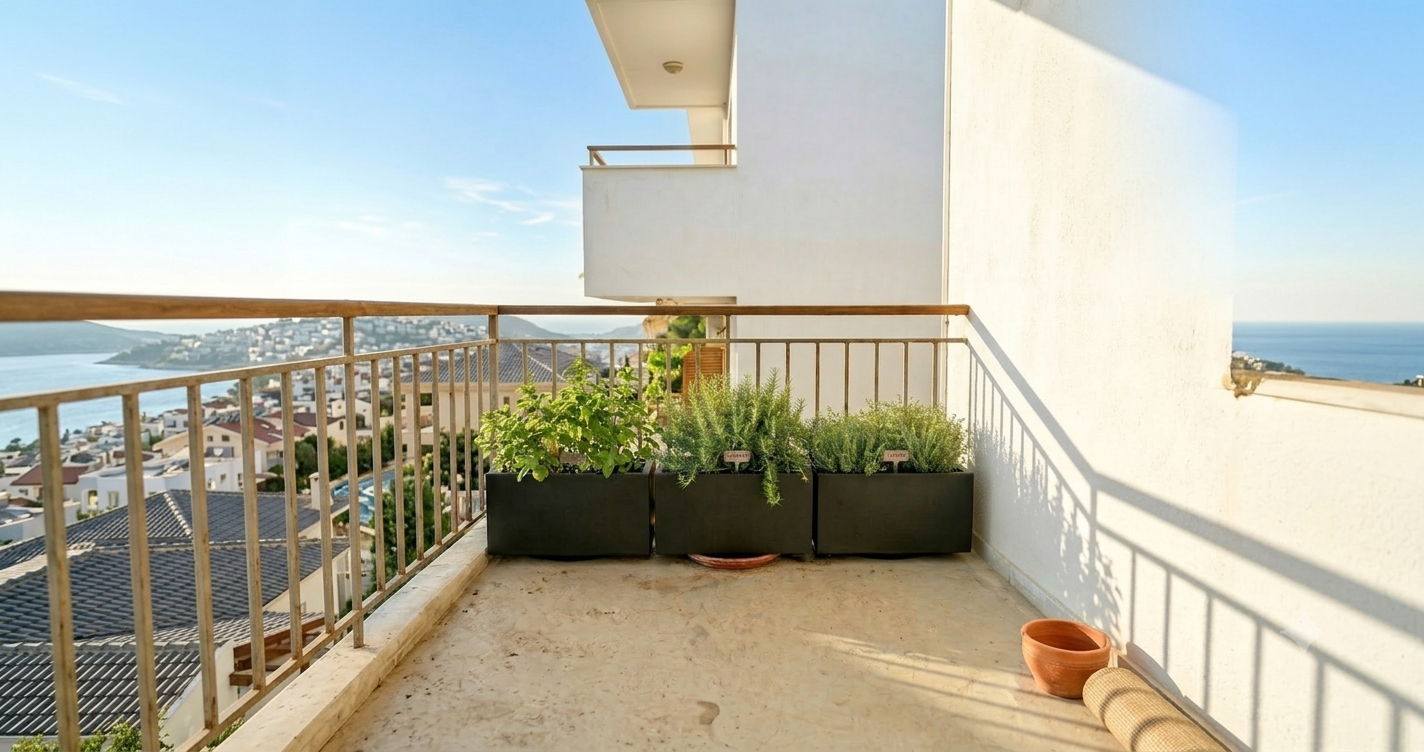
Rectangular planter boxes suit balconies because they use narrow spaces efficiently. They can sit along a wall, define the edge of a seating area or create a planted screen without filling the entire floor with separate pots.
But balcony planters need more thought than garden pots placed at ground level. Final weight, wind exposure, drainage and building rules all matter. The best-looking planter is still the wrong choice if it overloads the space, sends water onto the balcony below or becomes unstable in strong wind.
Why rectangular planters work well on balconies
- Their long, narrow shape fits naturally against walls and balcony edges.
- They create a cleaner visual line than a collection of unrelated pots.
- Several compatible plants can share one container.
- Tall rectangular planters can add privacy without permanent screening.
- Low planter boxes can divide a seating area without blocking the outlook.
They do not automatically “spread weight safely” simply because they are rectangular. Weight still needs to be considered in relation to the balcony structure, planter placement and the building’s requirements.
Start with the balcony—not the planter
Before choosing a size, measure the available length and depth and leave enough room to move comfortably. A planter that fits on paper can still make a narrow balcony feel unusable once chairs, doors and walking space are taken into account.
- Check that doors and windows can open fully.
- Maintain a clear path to exits and balcony drains.
- Consider where water will go after watering or heavy rain.
- Check body corporate or owners corporation rules before attaching anything to railings, walls or floors.
- Confirm structural capacity before installing large or unusually heavy planters.
Balcony weight: avoid guesswork
A planter becomes much heavier once it contains potting mix, plants and retained water. Concrete, stone and large terracotta planters may already be heavy before they are filled.
There is no responsible generic kilogram figure that can confirm what your balcony will safely support. Building age, design, condition and the way loads are distributed all matter. Ask the owners corporation, building manager or a suitably qualified structural professional for advice relevant to the actual property.
As a practical purchasing rule, lightweight fibreglass or composite planters give apartment owners more flexibility. They reduce the empty weight while still allowing a substantial planter to be used. This does not remove the need to consider the filled weight.
Choosing the right material
| Material | Why it may suit a balcony | Main trade-off |
| Fibreglass or composite | Lightweight, easy to position and available in architectural finishes. | Confirm the individual product’s outdoor rating and construction. |
| Powder-coated metal | Clean profile and useful for long, narrow planter designs. | Coating quality, drainage and coastal exposure matter. |
| Timber | Adds warmth and suits relaxed or natural settings. | Needs suitable construction, lining and ongoing maintenance. |
| Terracotta or kiln-fired clay | Natural finish and good visual character. | Heavy, breakable and quicker to dry in exposed heat. |
| Concrete | Stable, durable and visually substantial. | Often too heavy for a balcony without specific structural advice. |
Fibreglass planters
Fibreglass is often the most practical starting point for an apartment balcony. It gives the appearance of a substantial planter without the empty weight of concrete. It is also easier to position before planting and easier to remove if the balcony layout changes.
Not all fibreglass products are identical. Check the finish, wall construction, drainage and whether the particular planter is recommended for continuous outdoor exposure.
Timber planter boxes
Timber softens a hard balcony and works well with leafy planting. The timber species, fixings, internal lining and drainage determine how well it will last. For edible planting, confirm that the timber treatment and liner are suitable for the intended use.
Concrete and terracotta
Both materials can look excellent, particularly on ground-level terraces and courtyards. On an elevated balcony, weight becomes the deciding issue. Do not assume a smaller concrete planter is automatically acceptable—check the filled weight and seek building-specific advice where required.
Drainage without upsetting the neighbours
Drainage is essential, but uncontrolled runoff is not acceptable in an apartment building. Water needs to leave the root zone without flowing across the balcony, blocking a building drain or dripping onto the property below.
- Choose planters with adequate drainage holes.
- Use correctly sized saucers or contained drainage trays where appropriate.
- Raise the planter slightly on stable pot feet if this is needed to keep the holes clear.
- Water slowly and stop before the tray overflows.
- Empty standing water so it does not become stagnant or attract mosquitoes.
- Keep the balcony’s own drainage points clear.
A layer of gravel at the bottom does not replace proper drainage and simply reduces the volume available for potting mix. Use a suitable container mix, keep the holes clear and manage the runoff properly.
Use potting mix, not garden soil
Garden soil is heavy and tends to compact inside containers. Use a quality potting mix intended for the plants being grown. It is lighter, better aerated and designed to drain more reliably in a planter.
Do not use a universal soil recipe copied from the internet. Herbs, screening plants, succulents and flowering annuals have different moisture requirements. Follow the plant and potting-mix guidance, and avoid adding sand or water crystals unless they are appropriate for that particular planting.
Wind: stability matters more than height
Wind on an exposed balcony can dry plants quickly and turn tall foliage into a sail. The risk is not limited to the planter tipping over; branches, trellises and loose accessories can also become unsafe.
- Choose a wide, stable footprint rather than a narrow top-heavy shape.
- Use lower or flexible planting in very exposed positions.
- Avoid freestanding trellises unless the complete system is designed for the site.
- Use only purpose-designed railing planters and mounting hardware.
- Never improvise upper-level fixings with rope, cable ties or unapproved brackets.
- Do not drill into the balcony slab, membrane or balustrade without written approval and appropriate professional advice.
Using planters for balcony privacy
A row of rectangular planters can soften an overlooked balcony and create useful separation from neighbouring apartments. The aim is not necessarily to build a solid green wall. Partial screening often provides enough privacy while preserving light, airflow and a sense of space.
Screening plants need sufficient soil volume and ongoing care. A plant that looks compact at purchase may become too large, too thirsty or too exposed to wind once mature. Check the mature height and width, root space, light requirements and maintenance needs before planting.
| Planting approach | Where it may work | What to consider |
| Clumping grasses | Modern balconies and exposed positions. | Choose a species and mature size suited to the climate and container. |
| Compact screening shrubs | Larger planters with adequate root volume. | Regular pruning, watering and eventual size. |
| Climbers on an approved support | Where vertical screening is permitted. | Support design, wind loading and building approval. |
| Layered foliage | Smaller balconies needing softer partial privacy. | Combine compatible plants rather than overcrowding. |
Choosing plants for the position
The balcony’s aspect and exposure should decide the planting. A bright sheltered balcony in Brisbane is a different environment from a shaded, wind-exposed balcony in Melbourne.
Bright and sunny positions
Mediterranean herbs, many succulents, hardy flowering plants and some compact vegetables can work well where there is enough sun. Check how much heat reflects from glass, walls and paving before assuming every sun-loving plant will cope.
Part-sun and protected positions
Parsley, chives, mint, some ferns and a range of foliage plants may suit gentler light. Plant labels remain the best starting point, but observe the actual balcony across the day and through the seasons.
Exposed and windy positions
Lower-growing, flexible plants are generally more manageable than tall, dense canopies. Locally suitable grasses and hardy foliage plants may work, but species selection should reflect the local climate and the planter size.
Making a small balcony look considered
Small spaces usually look better with fewer, better-proportioned planters. Filling every edge can make the balcony feel smaller and creates more watering and maintenance than expected.
- Repeat one planter shape or finish to create a consistent line.
- Use one strong planting idea rather than many unrelated species.
- Keep enough open floor area for the balcony to remain usable.
- Use vertical planting only where supports and fixings are approved.
- Choose a restrained colour palette and let the foliage provide variation.
- Place the largest planter first, then decide whether anything else is needed.
Ongoing care
Balcony planters dry out differently from garden beds. Wind, reflected heat, planter material and soil volume all change watering frequency. Check the potting mix rather than relying on a fixed calendar.
- Water thoroughly when the upper layer of potting mix begins to dry.
- Check more frequently during hot or windy weather.
- Feed and refresh the mix according to the plant and product instructions.
- Prune screening plants before they become top-heavy.
- Inspect planters, saucers, feet and brackets for movement or damage.
- Clean marks and spills before they stain balcony surfaces.
Frequently asked questions
Choosing a balcony planter from Outdoor Emporium
Measure the space first and decide what the planter needs to do: soften a wall, hold herbs, add a feature or provide partial privacy. Then compare the external dimensions, internal planting volume, empty weight, drainage and finish.
If you are unsure about scale, send Outdoor Emporium a photograph and the dimensions of your balcony. We can help narrow down the shapes and sizes that are likely to work. Structural suitability, fixing approval and building compliance must still be confirmed for the individual property.